
Thyroid Diet Foods When You Also Have Prediabetes

Last updated: November 19, 2026
The best thyroid diet for prediabetes is built around protein, high-fiber foods, and steady portions of carbohydrate, not around extreme food rules. If you manage both conditions, the safest default is a plate that keeps blood sugar steadier while still covering the nutrients thyroid care often depends on. Talk to a qualified clinician about your own labs, medicines, and symptoms before making big changes.
Key takeaways
- Choose meals that combine protein, fiber, and a modest carb portion, not carb-only plates.
- Most people do better with simple, repeatable meals than with strict “thyroid diet” rules copied from the internet.
- Snacks that include a protein food and a fiber-rich food are usually easier on blood sugar than refined starch alone.
- Big carb swings, skipped meals, and long gaps between eating can make prediabetes harder to manage.
- Thyroid and blood sugar needs can overlap, but they are not identical, so the same meal plan does not fit everyone.
What is the main food pattern to aim for?
The main pattern is a balanced plate with protein, high-fiber foods, and controlled carbohydrate portions. That approach fits the overlap between a thyroid diet and prediabetes better than a one-note plan that cuts whole food groups. The National Institute of Diabetes and Digestive and Kidney Diseases and the Centers for Disease Control and Prevention both describe prediabetes as a condition where food choices and activity matter, which is why meal structure matters here: NIDDK prediabetes overview and CDC prediabetes page.
For thyroid nutrition, the generic advice people often hear is too narrow. Some people fixate on “thyroid-friendly” foods and end up eating too little protein or too many refined carbs. That is a problem for blood sugar, because blood glucose tends to rise faster when a meal is built around bread, rice, cereal, juice, or sweets without enough protein or fiber.
A better working rule is simple: build the meal around a protein food, then add non-starchy vegetables or another high-fiber food, then add a measured carbohydrate. That may sound plain, but plain is often what holds up in real life. It also fits the kind of evidence that shows up in the public literature: the PubMed query for this topic returned 14 human records from 2016–2026, and 5 of those 14 were review articles; the median publication year in the sample read was 2020, and the median abstract study duration was 26 weeks, computed from the records read on 2026-11-10.
What should be on the plate?
The plate should usually start with protein, then high-fiber foods, then a smaller carb portion. Protein helps slow the rise in blood sugar after a meal, and high-fiber foods tend to have the same advantage because they digest more slowly than refined starch. In practice, that means meals built from eggs, plain yogurt, tofu, fish, poultry, beans, lentils, vegetables, nuts, seeds, and whole grains are easier to balance than meals built from bread or sweets alone.
A useful distinction is between carbohydrate balance and carbohydrate elimination. A thyroid diet for prediabetes does not need to erase carbohydrate; it needs carbohydrate to be distributed more evenly across the day. The risk with extreme restriction is that some people end up overcorrecting later and eating larger carb portions at the next meal, which can be harder on blood sugar.
High-fiber foods matter in two ways. First, they help with fullness, so a meal is less likely to trigger grazing. Second, they often come packaged with vitamins and minerals that matter in an overall healthy diet. Beans, lentils, vegetables, berries, and intact whole grains are practical options. What is less useful is relying on “healthy” packaged foods that still act like dessert once the fiber is stripped away.
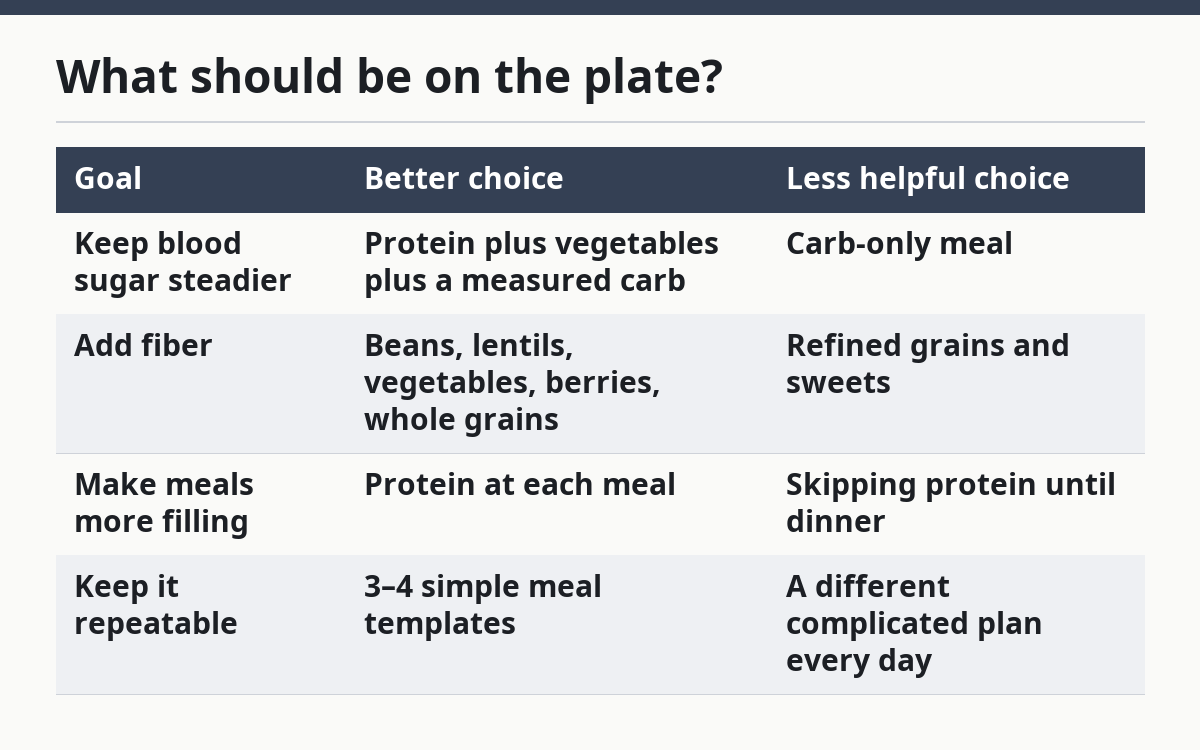
The table below shows the food pattern in practical terms.
| Goal | Better choice | Less helpful choice |
|---|---|---|
| Keep blood sugar steadier | Protein plus vegetables plus a measured carb | Carb-only meal |
| Add fiber | Beans, lentils, vegetables, berries, whole grains | Refined grains and sweets |
| Make meals more filling | Protein at each meal | Skipping protein until dinner |
| Keep it repeatable | 3–4 simple meal templates | A different complicated plan every day |
How do I build blood sugar-friendly meals?
Blood sugar-friendly meals are built in 3 to 4 steps and repeated often enough that you do not need to guess. First, choose a protein. Second, add a large serving of non-starchy vegetables or another high-fiber food. Third, add a modest serving of carbohydrate if you want or need it. Fourth, add a fat source only if it helps the meal stay satisfying, not because fat is the main event.
-
Pick one protein food for each meal. Aim for a visible serving, not a token bite. Verify that the meal contains protein before you move on. If the plate is mostly starch, the meal is not built for prediabetes.
-
Add vegetables or another fiber source to at least half the plate. Non-starchy vegetables are the easiest fit here. Verify that the fiber food is not hidden in a sauce or topping. If the only vegetables are a few leaves of lettuce, the plate is still thin on fiber.
-
Choose one carbohydrate portion, not several. This can be a grain, starchy vegetable, fruit, or dairy food, but not all of them in large amounts at once. Verify that the carb is one part of the meal, not the whole meal. If the meal has bread, rice, and dessert together, the blood sugar load is usually too high.
-
Keep drinks simple. Water, unsweetened tea, or plain coffee are easier to pair with meals than sweet drinks. Verify that the drink does not add sugar. If the drink is sweet, it can undo the balance of the plate.
-
Use snacks only when they fill a real gap. A snack should bridge hunger, not extend eating all day. Verify that the snack contains protein, fiber, or both. If it is mostly a refined starch, it will usually behave more like a small dessert than a stabilizing snack.
-
Repeat the same structure at lunch and dinner. Repetition reduces decision fatigue, which matters when you are also tracking thyroid symptoms, appointments, or medications. Verify that the pattern still feels sustainable after several days. If the plan is too strict to repeat, it usually fails.
-
Watch the response, not just the rule. Blood sugar patterns vary by person, and thyroid symptoms can affect appetite, digestion, and energy. Verify whether your meals leave you steady or shaky, hungry soon after eating, or overly full. If you notice repeated swings, the plan needs adjustment with a professional.
What snacks work for both thyroid health and prediabetes?
The best snacks for both are protein-forward, fiber-rich, and small enough not to become a second meal. A snack that combines those two features is less likely to spike blood sugar than crackers, pastries, or sweet drinks. It also works better than a “healthy” snack that is really just a refined carb in disguise.
Good snack ideas include plain yogurt with seeds, a handful of nuts with fruit, vegetables with hummus, or a boiled egg with a piece of fruit. Those choices are simple, portable, and easy to portion. They also fit the kind of meal pattern most people can repeat on a workday without turning snack time into an eating project.
The main drawback is that snacks are easy to overdo. If you are hungry every 2 hours, the issue may be meal balance, sleep, medication timing, or a schedule problem rather than a snack problem. A snack is not a fix for a lunch that has no protein or for a dinner that is mostly starch.
When does the standard advice not fit?
Standard advice does not fit when your medication, symptoms, or eating pattern make timing and portion control harder than usual. Thyroid disease and prediabetes do not always overlap neatly, and the same plate pattern can behave differently from one person to the next. That is why the details matter.
- You are having repeated blood sugar swings: that suggests the current carb pattern is too uneven — bring the pattern and the numbers to a qualified clinician or diabetes educator.
- You are skipping meals because of low appetite: that can leave you underfed at one meal and overhungry at the next — ask for a plan that matches your real schedule.
- You have digestive symptoms that limit fiber: that changes what “high-fiber” can mean for you — get individualized advice instead of forcing a standard plan.
- You are using thyroid medicine and food timing is confusing: medication timing can affect how meals fit into your day — confirm the schedule with your prescriber or pharmacist.
- You have other conditions that affect eating, such as kidney disease or celiac disease: those conditions can change protein, grain, and supplement choices — do not copy a generic thyroid diet.
The consequence of ignoring those situations is usually not one dramatic event; it is a plan that fails quietly. Meals feel random, blood sugar stays unstable, and the diet becomes harder to follow each week.
What mistakes do people make most often?
The most common mistakes are all versions of imbalance. A thyroid diet for prediabetes goes wrong when one food group gets all the attention and the rest of the plate disappears.
First, people cut carbohydrate too hard and then rebound into larger portions later. That can make blood sugar harder to manage across the day. The better alternative is a measured carb portion at regular meals.
Second, people eat “healthy” foods that are still mostly starch. A smoothie, a granola bowl, or a large serving of crackers can look virtuous and still push blood sugar up fast. The fix is to add real protein and fiber, not just fruit or a label that says healthy.
Third, people save protein for dinner. That leaves breakfast and lunch weak, which often leads to hunger and snacking. Protein earlier in the day is usually the better pattern.
Fourth, people depend on snacks instead of meals. That can create constant eating without real balance. The better choice is 3 structured meals, with snacks only as needed.
Fifth, people treat all high-fiber foods as interchangeable. A bowl of beans is not the same as a fiber bar or a few spoonfuls of cereal. The difference matters because whole-food fiber tends to travel with more nutrients and less added sugar.
How do I make this fit into a real week?
It fits best when you use a short list of repeatable meals and snacks, then rotate them rather than inventing new ones each day. That is the most practical way to keep both blood sugar and thyroid nutrition on track without turning the kitchen into a research project. A 3-meal pattern usually works better than trying to “eat perfectly” for 7 days straight.
A simple week often looks like this: one protein-centered breakfast, one balanced lunch, one balanced dinner, and one or two planned snacks if hunger demands it. Meals can stay boring in structure while still changing in flavor. The point is not culinary variety; the point is a pattern you can actually keep.
If you want the broader context for special diets and conditions, the hub page on thyroid nutrition for special diets and conditions belongs beside this one. This page stays focused on the overlap with prediabetes, where the questions are about blood sugar, not weight-loss rules or a full thyroid meal plan.
Can a thyroid diet also be blood sugar friendly?
Yes, a thyroid diet can also be blood sugar friendly when it is built around protein, fiber, and reasonable carbohydrate portions. The overlap is strongest at the meal level, where a steady plate is easier on blood sugar than a carb-heavy plate. What does not work as well is a rigid, one-size-fits-all thyroid rule that ignores blood sugar patterns.
The trade-off is that some popular thyroid diet advice is too narrow for prediabetes. If you copy it without looking at carb balance, you may end up with meals that are still hard on glucose control. A clinician can help tailor the pattern if your symptoms, medications, or glucose readings add complexity.
What snacks work for both thyroid health and prediabetes?
Snacks that pair protein with fiber are the safest starting point for both thyroid health and prediabetes. Plain yogurt with seeds, nuts with fruit, or vegetables with hummus are straightforward examples that are usually easier on blood sugar than crackers or sweets. The best snack is the one that solves hunger without becoming a second lunch.
Timing matters too. If snacks are happening because meals are too far apart, the answer may be to adjust meals first. If you are snacking constantly, the issue may be hunger, habit, or an unbalanced schedule, and that deserves a closer look.
How should meal timing change if i have prediabetes and thyroid disease?
Meal timing should usually be steady rather than erratic if you have prediabetes and thyroid disease. Long gaps between meals can make blood sugar swings and rebound hunger more likely, while highly irregular eating can make it harder to notice what foods help or hurt. A regular pattern often makes the day easier to manage.
The exact schedule depends on your medication plan, appetite, and work hours, so the safest step is to ask a qualified professional how your medicines and meals should line up. If you are skipping breakfast, eating very late, or changing meal timing often, that is a sign the plan needs to be adjusted instead of forced.
Drafted with AI; not yet reviewed by a person.