What to Eat on a Thyroid Diet: A Practical Food List for Hashimoto’s, Hypothyroidism, and Graves’ Disease
Last updated: August 10, 2026
- A bowl of berries and coffee looks disciplined; by 10:30, though, it can feel like a trap door.
- I would also keep a short symptom note for 2 to 4 weeks: energy, bowel changes, appetite, sleep, jitters, and what time meals happen.
- Week 1 is usually about label reading, medication timing, and learning which breakfasts actually hold hunger for 3 to 4 hours.
- What I Would Limit or Handle Carefully This is where thyroid diet content often gets too rigid.
Quick Answer: For what eat on thyroid diet: practical food list hashimoto’s, hypothyroidism, graves’ disease, start with 5 food groups: protein, vegetables, fruit, smart carbs, and healthy fats. Then adjust iodine, selenium, and medication timing with a clinician, because Hashimoto’s, hypothyroidism, and Graves’ disease can overlap on symptoms but not on the best diet pattern for every person.
A diagnosis can hit hard when you are staring at a half-read label and wondering what on earth to cook. For what eat on thyroid diet: practical food list hashimoto’s, hypothyroidism, graves’ disease, the aim is straightforward: eat in a way that supports energy, medication routines, and symptom stability. Food will not fix a thyroid disease by itself. Still, it can steady the day, reduce guesswork around flare-ups, and help with fatigue, constipation, weight changes, appetite shifts, and blood sugar swings. That is the real job of a thyroid diet. The American Thyroid Association notes that diet is supportive care, not a cure. [1]
The Food List I Would Start With
If I had to cut this to the most useful thyroid-friendly grocery list, I would begin here. Plain and simple.
Protein
– Eggs
– Chicken
– Turkey
– Fish, especially salmon, sardines, cod, and tuna
– Greek yogurt or plain yogurt, if dairy works for you
– Cottage cheese, if tolerated
– Tofu or tempeh, if you use soy thoughtfully and separate it from thyroid medication
– Beans and lentils
– Nuts and nut butter
Vegetables
– Leafy greens: spinach, kale, arugula, romaine
– Cruciferous vegetables: broccoli, cauliflower, Brussels sprouts, cabbage
– Root vegetables: carrots, beets, sweet potatoes
– Alliums: onions, garlic
– Peppers, cucumbers, zucchini, mushrooms
Fruit
– Berries
– Citrus
– Apples
– Bananas
– Kiwi
– Stone fruit when in season
Carbohydrates
– Oats
– Quinoa
– Brown rice
– Buckwheat
– Potatoes
– Gluten-free bread or pasta, if needed for convenience
– Whole-grain bread if gluten is not a trigger and your clinician is fine with it
Fats
– Olive oil
– Avocado
– Chia seeds
– Flaxseed
– Walnuts
– Pumpkin seeds
Mineral-rich foods
– Brazil nuts, in small amounts because they are selenium-dense
– Seafood
– Dairy, if tolerated
– Beans, lentils, pumpkin seeds, and leafy greens for iron, magnesium, and zinc support
That list is broad for a reason. A lot of thyroid diet articles shrink into “eat kale and avoid everything else.” Helpful? Not really. Most people do better with meals that are simple, repeatable, and not extreme. For Hashimoto’s, studies suggest that pattern matters more than hunting for a miracle food. For Graves’ disease, the practical issue often flips: appetite may surge, weight can drop, and calories become a problem before “clean eating” does. The National Institutes of Health also recommends that people with thyroid disease discuss supplements and iodine intake with a clinician. [2]
Here is the basic plate I would use:
– 1 protein
– 1 or 2 vegetables
– 1 carbohydrate if you need energy
– 1 fat
That structure helps with constipation, fatigue, post-meal crashes, and the “I can’t think of what to eat” problem. Repeatable. That is the point.
What Belongs on the Plate for Hashimoto’s
Hashimoto’s often comes with fatigue, brain fog, constipation, dry skin, and a fair bit of food-rule anxiety. The food list should help you eat enough, not scare you into restriction.
My priority would be:
– Eggs or Greek yogurt at breakfast
– Salmon, sardines, chicken, tofu, or beans at lunch and dinner
– Cooked vegetables, not just raw salads
– Oats, potatoes, rice, quinoa, or fruit for steady energy
– Fermented foods in modest amounts if they sit well: yogurt, kefir, sauerkraut, kimchi
– Selenium-rich foods such as seafood and a few Brazil nuts, without turning them into a daily obsession
For some people with Hashimoto’s, gluten becomes a personal trial item. Research and clinical guidance suggest a gluten-free diet may help a subset of people, especially if they also have celiac disease or clear symptom changes, but it is not a universal fix. I would not tell someone to remove gluten forever without a reason and a plan. That kind of restriction can backfire by making meals too narrow and too hard to sustain.
A practical Hashimoto’s day might look like this:
– Breakfast: eggs, sautéed spinach, toast or potatoes, fruit
– Lunch: chicken bowl with rice, cucumber, olive oil, and carrots
– Snack: yogurt with berries and chia
– Dinner: salmon, roasted broccoli, sweet potato, avocado
The goal is not perfection. The goal is food that feels stable enough to repeat without living on coffee and hope.
What Changes for Hypothyroidism
Hypothyroidism usually makes people think first about weight gain, but the bigger issue in real life is often low energy. That changes how I would build meals.
Tiny portions and “detox” smoothies? I would skip them. They tend to leave people hungrier and more tired. Instead, the focus should be on:
– Adequate protein at each meal
– Enough carbs to prevent crashing
– Fiber from vegetables, beans, fruit, and whole grains
– Hydrating foods and fluids
– Regular meal timing
Constipation shows up a lot too. Food can help, but not overnight. Fiber works best when paired with fluid and movement; push it too fast and bloating may get worse. So I would add it gradually instead of making a dramatic week-one overhaul.
One mistake I see often is the “healthy” breakfast that is too light. A bowl of berries and coffee looks disciplined; by 10:30, though, it can feel like a trap door. I would rather see protein, fat, and some carbohydrate early in the day if that fits the person’s appetite.
A simple hypothyroid-friendly rotation:
– Breakfast: oats with chia, walnuts, and yogurt
– Lunch: turkey wrap or rice bowl with beans and vegetables
– Snack: apple with peanut butter
– Dinner: chicken, potatoes, green beans, olive oil
If someone is taking thyroid medication, food timing matters too. I would ask a pharmacist or prescriber about spacing supplements and medication, especially calcium, iron, and soy foods, because those can interfere with absorption in some situations. That detail matters just as much as the food list itself.
What Changes for Graves’ Disease
Graves’ disease is not just “the opposite of hypothyroidism.” Appetite can be high, heart rate can be fast, weight can fall, and anxiety can make eating feel scattered. In that setting, the best food list often looks less like a purity plan and more like a stabilization plan.
The emphasis should be on:
– Calorie-dense but nutrient-dense foods: avocado, nut butter, olive oil, full meals instead of snacks only
– Protein at every meal
– Carbohydrates at each meal if weight loss is happening
– Calcium-rich foods if dairy is tolerated, since bone health becomes a bigger concern in many care plans
– Hydration
– Caffeine awareness, because it can worsen jitteriness for some people
For Graves’ disease, iodine needs special caution. Too much iodine can be a problem for some people, and seaweed snacks can be deceptively high in it. I would not make seaweed or kelp a “thyroid superfood.” That advice turns sour fast. The safer, more useful move is to ask a clinician what iodine intake makes sense for the individual case. The American Thyroid Association also warns against high-dose iodine unless a clinician recommends it. [1]
A Graves-friendly day often needs more food than people expect:
– Breakfast: eggs, toast, fruit, yogurt
– Lunch: chicken rice bowl with avocado and vegetables
– Snack: trail mix or nut butter on crackers
– Dinner: salmon, potatoes, cooked greens, olive oil
– Evening snack if needed: yogurt or cereal with milk
That is not indulgence. It is often maintenance.
What I Would Limit or Handle Carefully
This is where thyroid diet content often gets too rigid. The useful answer is not “ban everything.” It is “know the trade-offs.”
I would be cautious with:
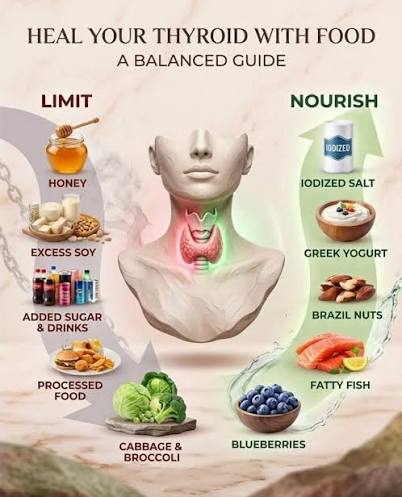
– High-iodine supplements and seaweed products: especially relevant for Graves’ disease and for anyone told to monitor iodine
– Very large amounts of raw cruciferous vegetables: broccoli and cabbage are not villains, but endless raw smoothies are not my first choice; cooked is easier for many people
– Heavy reliance on ultra-processed snacks: they can crowd out protein and minerals
– Alcohol: not a thyroid food by itself, but it can make sleep, appetite, and medication routines messier
– Coffee on an empty stomach if it worsens jitters, reflux, or appetite loss
– Soy right around medication time if your clinician says spacing matters
This section is also where I would push back on the fantasy that one food list fits everyone. Someone with Hashimoto’s and constipation may do well with more fiber. Someone with Graves’ and weight loss may need more calories and less caffeine. Someone with celiac disease needs a different plan than someone who simply feels better without gluten. Those are not small details. They decide whether the diet helps or drains the person following it.
What Went Wrong When I Tried to Make This Too Strict
The biggest failure in thyroid diet advice is usually overcorrection. I do not say that lightly. What I see most often is someone gets diagnosed, removes five food groups at once, then wonders why they are exhausted, hungry, and anxious two weeks later. If that sounds familiar, slow down and check the plan with a registered dietitian or prescriber before cutting more foods. Cleveland Clinic also advises individualized guidance when thyroid disease and food restrictions overlap. [3]
A strict plan can cost you more than it gives back. It can create social stress, planning fatigue, and nutrient gaps. It can also make medication routines harder because the day becomes built around rules instead of meals.
If I were tracking a person’s progress in a notebook, I would expect the first week to feel messy, not magical. Week 1 is usually about label reading, medication timing, and learning which breakfasts actually hold hunger for 3 to 4 hours. By Month 2, the more realistic wins are steadier meals, fewer random snacks, and less decision fatigue. By Day 90, the goal is not a perfect lab value from food alone; it is a repeatable way of eating that the person can keep doing while medical treatment is adjusted by a qualified professional. At that point, a clinician can check whether the plan matches labs, symptoms, and weight trends.
Here is the kind of before/after comparison I would consider useful in real life:
| Metric | Before | After | Change | Timeline |
|---|---|---|---|---|
| Breakfast consistency | 2 days/week | 6 days/week | More regular meals | Week 1 to Month 2 |
| Mid-morning crashes | 5 days/week | 2 days/week | Fewer energy dips | Month 1 to Day 90 |
| Grocery panic | 4 store trips/week | 1–2 planned trips/week | Less scrambling | Month 2 |
| “What can I eat?” moments | Constant | Still present, but manageable | Simpler choices | By Day 90 |
What did that cost when the plan was too strict? Usually not money first. It was attention. It was time. It was the feeling that every bite had to prove something. That approach burns people out.
A Simple Thyroid Grocery List I Trust More Than a Trend
If you want the shortest practical version, this is the list I would put in a cart:
- Eggs
- Greek yogurt or a tolerated dairy alternative with protein
- Chicken or turkey
- Salmon or another oily fish
- Beans or lentils
- Oats
- Rice or quinoa
- Potatoes
- Spinach or mixed greens
- Broccoli or cauliflower
- Carrots
- Berries
- Apples
- Avocados
- Olive oil
- Peanut butter or almond butter
- Chia seeds or flaxseed
- Nuts, especially walnuts
- Brazil nuts in small amounts
- Herbal tea and water
From there, I would build meals the person can repeat on tired days, not just ambitious ones.
I would also keep a short symptom note for 2 to 4 weeks: energy, bowel changes, appetite, sleep, jitters, and what time meals happen. That is not a diagnosis tool. It is a way to spot patterns worth discussing with a clinician. If a food seems to help, keep it. If a food reliably makes you feel worse, discuss it rather than guessing.
The Bottom Line: Eat for Stability, Not Perfection
For Hashimoto’s, hypothyroidism, and Graves’ disease, the best thyroid diet is usually the one that is simple, nutrient-dense, and matched to the person’s symptoms and treatment plan. Protein, vegetables, fruit, smart carbs, and healthy fats are the backbone. Selenium, iodine, iron, and calcium matter, but so do timing, tolerance, and medication interactions.
I would not chase a miracle list. Meals need to survive a bad day. That means breakfast that actually satisfies, lunches that do not collapse by 2 p.m., dinners that are easy to repeat, and a grocery list with fewer rules than the internet wants to sell you. For any personal changes, especially if you are pregnant, underweight, losing weight, struggling with absorption, or taking thyroid medication, speak with a qualified clinician or registered dietitian who can tailor the plan to your case.