What a Third-Party Tested Supplement Seal Means for Thyroid Shoppers

Last updated: November 19, 2026
Quick Answer: A third-party tested supplement seal means an outside organization has checked specific quality points, not that the product will treat thyroid problems.
Key Takeaways
- Third-party certification means an independent group checked a supplement against a set standard.
- NSF and USP are the best-known public certification names shoppers may see.
- Treat the seal as verification, then confirm the claim in the certifier’s listing.
- A seal can support quality trust, but it does not prove thyroid benefit or overall safety.
A third-party tested supplement seal means an outside organization, not the supplement brand itself, has checked some part of the product against a stated standard. In this article on What Does a Third-Party Tested Supplement Seal Mean for Thyroid Shoppers?, the seal is a sign of independent quality assurance, but it does not mean the supplement is effective for thyroid problems, and it does not replace a conversation with a qualified clinician about your own situation.
If you are shopping for thyroid-related supplements, that distinction matters. People often assume a seal means “safe for me” or “good for thyroid health.” It does not. It usually means the company submitted the product, the ingredients, or a production batch to an independent certifier such as NSF or USP, and the certifier verified specific quality points. For health questions, especially thyroid disease, speak with a qualified professional about your personal risks, prescriptions, and lab results.
What a third-party supplement certification actually is

A third-party supplement certification is independent verification that a dietary supplement meets a defined standard set by someone other than the manufacturer. That standard may cover identity, potency, contaminants, label accuracy, or manufacturing practices, depending on the program. For an overview, see the FDA’s dietary supplement pages and USP’s public program information.
The phrase matters because “third-party tested” is not one single thing. One seal may mean the product was tested for certain contaminants and label claims; another may focus on manufacturing facilities; a third may apply only to a specific lot number, not every bottle ever sold. The seal does not mean the supplement is medically appropriate for thyroid symptoms, autoimmune thyroid disease, or low thyroid hormone.
For thyroid shoppers, the practical question is narrower: does the seal make the label more trustworthy? Usually, yes, for the specific claims the certifier covers. But a trustworthy label is not the same thing as a useful product. A selenium capsule can be accurately labeled and still be the wrong choice for a person who already gets enough selenium from food or who has another condition that changes what is appropriate.
There is also a timing issue. Certification can apply to a manufacturing run, a formula, or a facility. A bottle on a shelf in 2026 may not tell you whether the next batch will be checked in the same way unless the seal or the certifier’s listing says so. That is why the seal should be read as a quality signal, not a health guarantee.
Which seals matter most to thyroid shoppers?
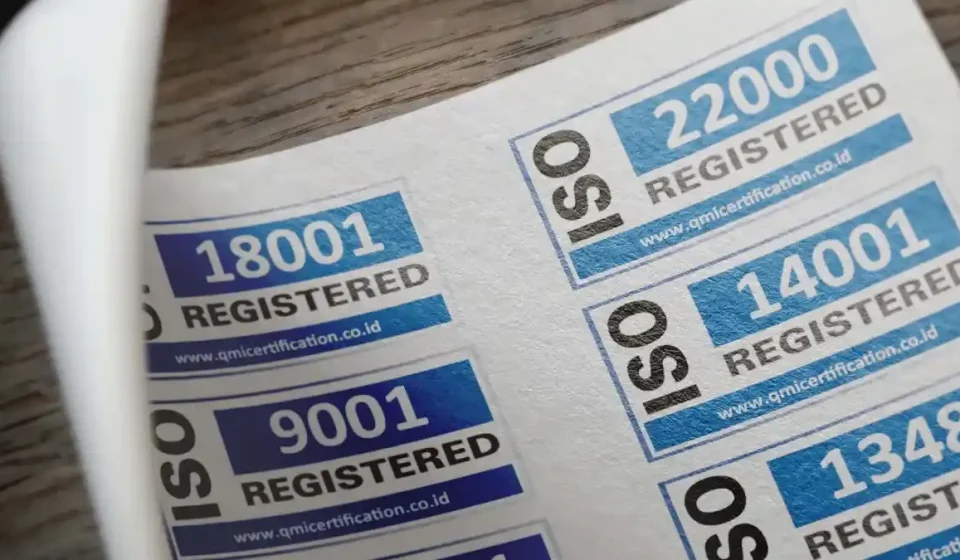
The most familiar names are NSF and USP, because both are real standards organizations with public-facing certification programs. NSF certification is commonly associated with testing for contaminants and label verification. USP verification is tied to the United States Pharmacopeia standard, which is a recognized quality benchmark for dietary supplements.
These are not the only programs shoppers may see, but they are among the names shoppers are likely to see on the front of a bottle or on a product listing. The important part is not the logo alone. It is what the logo stands for: an actual standard, a defined test method, and a way to confirm whether the product is in the certifier’s database or listed in its directory.
A thyroid shopper should care about that because supplement labels can be noisy. A product may advertise “clean,” “pure,” “doctor formulated,” or “thyroid support” without proving much. A seal from NSF or USP is more meaningful than marketing language because it points to an outside process. Still, the standard is specific. It may not cover every ingredient in a blend, and it may not tell you whether the formula is a good fit for thyroid disease, Hashimoto’s, or medication timing.
This is where many people get tripped up. “Third-party tested” is sometimes used loosely in ads to mean the brand hired an outside lab for a single test. That can be useful, but it is not the same as a formal certification seal. The seal is stronger when it comes from a recognized certifier with a published standard and a searchable listing. A lab report the company never publishes is a weaker signal.
For readers comparing labels, the useful question is not “Is there a seal?” but “Which organization issued it, and what exactly did they verify?”
How to read a supplement seal step by step
Read the seal as a claim about verification, then check whether the claim can be confirmed. A good seal should point to a named certifier, a product or lot number, and a public way to check the listing. Use the same caution you would use with a lab result: the details matter.
- Identify the certifier by name. Look for NSF, USP, or another named program on the front label, back label, or product page. Verify that the logo is not just decorative artwork. A problem sign is vague language like “tested for quality” with no certifier named.
- Check what was certified. Read whether the seal applies to the finished product, a single lot, or the manufacturing facility. A facility seal may not cover every batch in the same way. If the scope is unclear, the seal is less useful.
- Look for a listing or verification number. Many programs provide a public directory, product code, or certification number. Verify that the number matches the product name and flavor, not just the brand family. A mismatch can mean the seal is stale or belongs to another item.
- Find the exact product version. Compare the dose form, capsule count, flavor, and serving size. A 60-count tablet may be certified while a 90-count softgel with the same brand name is not. If the label on the shelf does not match the listing, stop and recheck.
- Read the scope of testing. Confirm whether the program checks contaminants, identity, potency, or label accuracy. A seal that covers contaminants alone does not guarantee the label amount is exact. If you cannot find the scope, do not assume the broadest meaning.
- Check the date or status. If the certifier lists an expiration, suspension, or current status, use that information. A seal from a past batch may not cover the bottle in your hand. If the listing cannot be found, consult a qualified professional and treat the seal as unverified until you confirm it with the certifier.
- Compare the seal with the ingredient panel. Make sure the product still contains what the seal would have covered. A thyroid supplement blend can change without the front label changing much. If the ingredient list differs from the certified version, the seal may no longer apply.
- Ask whether the product is appropriate for your medicines. A seal does not check for interactions with levothyroxine or other prescriptions. If the supplement contains minerals or botanicals that matter for your medications, ask a clinician or pharmacist before relying on the seal.
For thyroid shoppers, the last step is the one people skip. A label can be clean and still be a poor fit for timing, absorption, or medical history. Certification helps with trust in manufacturing. It does not answer the clinical question.
What a seal can tell you about contaminants and quality
A third-party seal can tell you that a supplement has been checked against a defined quality standard, but it cannot tell you everything you want to know about safety. In practice, it usually gives a better view of contaminants, label accuracy, and manufacturing consistency than an unverified brand claim.
That matters in supplements because contamination concerns are not imaginary. Heavy metals, undeclared ingredients, and potency drift are the kinds of problems a certification program is designed to catch or reduce. Still, “designed to catch” is not the same as “guarantees none.” No seal can erase every manufacturing risk, and no seal proves that a product is clinically appropriate for a thyroid condition.
For thyroid shoppers, the biggest misunderstanding is thinking that a supplement with a seal must be “better” for the thyroid. The seal says something about quality control, not about indication. A product can be accurately made and still have no evidence that it improves thyroid function, thyroid antibodies, or fatigue. That is why the seal should sit in the quality column, not the treatment column, and you should ask a clinician before using it as a health decision.
There is another trade-off. Certifications can cost brands time and money, so not every company seeks them. A lack of seal is not proof of poor quality. It is a lack of independent verification, which is a different thing. On the other hand, a seal on a shelf product that cannot be confirmed in the certifier’s directory is a red flag.
A useful rule: if the seal helps you narrow the field to products with better manufacturing oversight, that is a real benefit. If you are using the seal to decide whether a product will help thyroid symptoms, the seal is being asked the wrong question.
What does the research on thyroid supplement labels actually show?
The thyroid supplement label literature is small enough that caution matters. Rather than giving a false sense of precision from a tiny search result set, the broader point is that the human evidence around thyroid supplements and labels is limited. The median publication year in the sample was 2019, according to PubMed (NCBI).
That small pool does not support sweeping claims. It does, however, show how limited the human evidence is around thyroid supplements and labels. Of the records reviewed, some were tagged “Randomized Controlled Trial” and some were tagged “Review” by PubMed (NCBI).
Why does that matter to a shopper? Because a third-party seal is a quality signal, not proof of thyroid benefit, and the published human literature tied to this topic is not dense enough to convert that seal into a treatment promise. If you are trying to decide between two products, the seal can help with trust in the manufacturing side. It cannot answer whether the product is useful for your thyroid diagnosis, your lab pattern, or your prescriptions.
A generic article often misses this point and talks as if testing and efficacy were the same thing. They are not. For thyroid shoppers, that difference is the whole story.
When a seal should make you pause instead of relax
A third-party seal should make you pause when the product looks certified but the context does not match your situation. That is especially true for thyroid shoppers, because supplements can affect medication timing, lab interpretation, and symptom tracking in ways a logo cannot fix.
The certifier cannot be verified: The logo is on the bottle, but the product does not appear in the organization’s directory — Treat the seal as unconfirmed and look for the exact product listing before trusting it.
The product version has changed: The certified listing names a different capsule count, flavor, or formula — The seal may not apply to the bottle you are holding, so do not assume equivalence.
The supplement contains multiple active ingredients: A blend with minerals, botanicals, and “thyroid support” claims can hide the real issue — Even a real seal may not tell you whether the formula is appropriate for your medicines or medical history.
You take prescription thyroid medication: A seal does not address spacing, absorption, or interaction concerns — Ask a qualified clinician or pharmacist about the specific product and your medication schedule.
The label makes disease claims: “Balances thyroid,” “reverses hypothyroidism,” or similar wording appears alongside the seal — That is a marketing claim, not a certification result, and it should lower trust rather than raise it.
The bottle is old stock or a marketplace listing: Third-party sellers can mix inventory, and old photos can linger after formulas change — Verify the current listing against the certifier’s database before buying.
The consequence of ignoring these signs is not just wasted money. It can also mean choosing a product that gives false reassurance, delays a proper evaluation, or complicates how a clinician interprets symptoms and labs. A seal should reduce uncertainty, not replace judgment.
What people get wrong about supplement label trust
The biggest mistake is assuming a seal means the supplement has been proven to help thyroid disease. It usually does not. The correct alternative is to treat the seal as a manufacturing and identity check, then separate that from any health claim.
A second mistake is trusting a logo without checking the listing. That can lead to buying a product that is no longer certified, was never certified in that exact form, or uses a seal the brand is not authorized to display. The correct alternative is to confirm the product in the certifier’s directory before purchase.
A third mistake is reading “third-party tested” as if it always means a formal certification program. Sometimes it only means the brand hired an outside lab once. The consequence is weaker trust than the label suggests. The correct alternative is to ask who did the testing, what was tested, and whether the result is public.
A fourth mistake is confusing quality with suitability. A well-made supplement can still be wrong for a person on thyroid medication, pregnant, or managing autoimmune disease. The consequence is misaligned expectations. The correct alternative is to pair label trust with professional advice about your own case.
A fifth mistake is ignoring the full ingredient panel because the front label looks reassuring. That can matter when the product includes iodine, selenium, iron, herbs, or other ingredients that change the risk profile. The correct alternative is to read the back panel first, then use the seal as one piece of evidence.
For thyroid shoppers, the right standard is simple: trust the seal for what it covers, and nothing more.
Bottom line for thyroid shoppers
A third-party tested supplement seal means an outside organization has checked defined quality points, not that the product will improve thyroid health. For thyroid shoppers, the seal is most useful as a trust signal for manufacturing, identity, and sometimes contaminants. It is least useful as a guide to whether the supplement fits your diagnosis, your medicines, or your lab pattern.
If you want one simple rule, use this one: choose the seal to reduce label risk, then use a clinician to judge health risk. That split keeps you from relying on a logo for a medical decision.
Drafted with AI; not yet reviewed by a person.