What to Ask Before a Thyroid Blood Test: A Pre-Lab Checklist

Last updated: November 19, 2026
Key Takeaways
- Confirm the exact thyroid panel before you leave the office.
- Most thyroid blood tests do not need fasting, but check your order first.
- Bring a medication list with each dose, schedule, and today’s dose time.
- List every supplement by name and dose, even if it seems harmless.
A thyroid blood test prep checklist for What to Ask Before a Thyroid Blood Test: A Pre-Lab Checklist starts with the questions that change how the lab should read your results: what tests are ordered, whether you need to fast, and which medicines or supplements the primary care clinician wants listed. If you walk in with that information ready, the visit goes faster and the result is easier to interpret. For general lab-prep guidance, MedlinePlus and the American Thyroid Association both stress following the ordering clinician’s instructions.
What to ask before the thyroid blood test
Ask what exact test panel is being ordered before you leave the office. That is the single most useful step because “thyroid blood test” can mean tsh alone, free t4, free t3, or a combination, and each one answers a different clinical question.
The wording matters for What to Ask Before a Thyroid Blood Test: A Pre-Lab Checklist. A tsh test checks the pituitary signal that tells the thyroid how hard to work. Free t4 reflects the circulating form of thyroxine that is not bound to proteins. Free t3 is less commonly ordered, but it can help in selected situations. If you are on levothyroxine, the clinician may care more about tsh and free t4 than about free t3, depending on why the test was ordered.
The question to ask is simple: “Which thyroid tests are on my lab order, and why those ones?” If the answer is vague, ask for the specific names. A paper or portal copy of the lab order helps if you later compare results across visits or switch labs.
Ask about timing too. Some blood draws are meant to happen before your daily dose of thyroid medicine, and some are fine after. A clinician or lab can tell you what they want for this specific order.
One more useful question: “Is this a one-time check or a repeat of prior levels?” That tells you whether the new result should be compared with a previous tsh drawn at the same lab, on roughly the same schedule, and under the same medication routine.
Do I need to fast before a thyroid blood test?
Most thyroid blood tests do not require fasting, but you should ask before you assume that is true for your order. Fasting is usually not needed for tsh, free t4, or free t3 by themselves, yet some clinicians bundle thyroid labs with other blood work that does require an 8- to 12-hour fast.
That is why the question needs to be asked at the appointment, not guessed at home. If the lab order includes glucose, lipids, or other chemistry tests, fasting may matter for the whole draw. The blood can usually be taken in one visit, but the prep instructions come from the full order, not from the thyroid test alone.
A practical way to check is to read the order itself or ask, “Does this lab order require fasting for the non-thyroid tests on it?” If the answer is yes, ask how long. Labs often use either an overnight fast or a morning draw, because that makes the appointment easier and reduces confusion about timing.
If you are unsure, do not skip breakfast on guesswork and arrive lightheaded, only to learn that fasting was unnecessary. That does not help the sample, and it can make the visit harder if you are already prone to dizziness. The better move is to confirm the rule ahead of time and bring a snack for after the blood draw if needed.
What medication list should I bring?
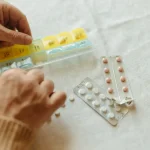
Bring a current medication list with the exact dose, not just the name. For thyroid testing, the list should include levothyroxine, any other prescription hormones, and anything taken daily or weekly, because the clinician needs to know what could affect tsh or free t4.
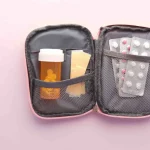
A useful list has five parts: the medicine name, the dose in mcg or mg, how often you take it, the time of day, and whether you took it today. If you use a pill bottle, a photo of the label works well. If you use a phone app, make sure the list matches the actual bottles in your home, not the version you meant to update last month.
This matters because medication timing can change interpretation. Levothyroxine taken shortly before a draw may affect the numbers the clinician sees, especially if the goal is to compare today’s result with a prior baseline. You do not need to solve that on your own; you do need to tell the lab and the ordering clinician exactly how you take it.
A good checklist for the medication list includes:
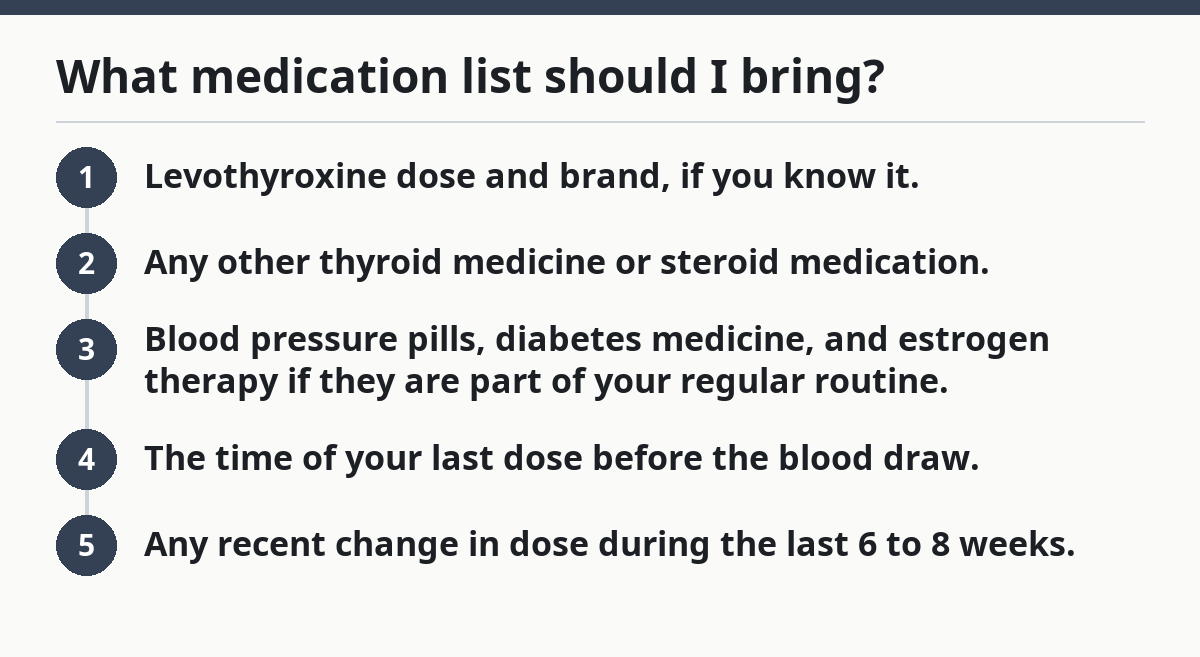
- Levothyroxine dose and brand, if you know it.
- Any other thyroid medicine or steroid medication.
- Blood pressure pills, diabetes medicine, and estrogen therapy if they are part of your regular routine.
- The time of your last dose before the blood draw.
- Any recent change in dose during the last 6 to 8 weeks.
That last item is worth flagging because thyroid levels are often interpreted in the context of a recent medication change. A tsh drawn too soon after a dose change can be less useful than one drawn after the clinician’s usual interval. If you are not sure whether a recent change matters, ask the person who ordered the test rather than guessing from the label on the bottle.
What supplement list matters most?
Your supplement list matters most when it includes anything taken for hair, nails, energy, sleep, or “thyroid support.” Those products are easy to forget, and they are exactly the kind of thing a clinician wants to know about before interpreting a thyroid panel.
Write down each supplement by name and dose, even if it seems harmless. Bring the bottle if you can. The label may show ingredients that do not match the front of the package, and the clinician may care about the exact formulation more than the marketing name. A list on your phone is fine if it includes the label dose and how often you take it.
Do not try to decide on your own which supplements “count.” If you take a multivitamin, an iron capsule, a calcium product, or an over-the-counter thyroid support pill, put it on the list. Some supplements change how your routine looks on paper, and that can change how the result is read. That is especially true when the clinician is trying to understand why tsh has moved since the last draw.
A clean supplement list should also note whether you changed anything in the last 2 months. A lot of thyroid management is about patterns over time, not one isolated blood draw. If you started or stopped a supplement recently, say so. If you are unsure of the exact name, take a photo of the package before the appointment so the office can identify it later.
This is one place where a generic article often gives the wrong impression: “supplements are optional.” They are not optional if they are part of your daily routine and may affect the lab story. A complete list helps the primary care clinician make sense of the test, and a professional can tell you what should be included for your order.
What should I tell the lab about timing?
Tell the lab when you last took levothyroxine and when the blood draw is happening. Timing is not a minor detail; it is part of the test context, especially if the clinician wants a repeat comparison with an earlier tsh or free t4.
If the appointment is early in the morning, ask the office whether they want you to take your usual dose before or after the blood draw. Some clinicians prefer the sample first, then the dose. Others are comfortable with your normal routine. The point is not to self-manage the question by memory; it is to get a clear instruction tied to this order.
There are also scheduling details worth mentioning if they apply: a recent dose change, a missed few days of medicine, or a test drawn at a different time than the last one. Even a difference of a few hours can matter when the goal is a clean comparison across visits. If your prior thyroid test was done at 8 a.m. and this one is at 3 p.m., say so when you check in.
The most efficient version sounds like this: “I take levothyroxine every morning at 7 a.m., and this blood draw is at 9 a.m. Should I wait until after the lab?” That gives the clinician enough information to decide without guessing. It also keeps the front desk from trying to interpret a medication question that belongs to the ordering clinician.
If you use multiple labs, ask whether this draw should be done at the same site as the last one. Different labs can use different assay platforms, and the cleanest comparison is often between results from the same method. That is a practical detail, not a dramatic one, but it can matter when a result is borderline. For more on thyroid testing choices, see the American Thyroid Association and MedlinePlus.
What symptom notes should I prepare?
Prepare symptom notes that focus on change, duration, and severity rather than a long story. A thyroid blood test is easier to interpret when the clinician knows what has changed in the last 2 to 6 weeks: fatigue, cold intolerance, palpitations, constipation, tremor, weight change, sleep change, or menstrual change.
Write down a short symptom timeline before you go. The best version is a few lines, not a paragraph:
- when the symptom started,
- whether it is getting better or worse,
- whether it is constant or comes and goes,
- and whether anything makes it better or worse.
If you have a prior tsh or free t4 result, bring the date and the rough value if you know it. You do not need to memorize the exact number, but it helps if you can say, “My last tsh was about 3 months ago, and the dose changed after that.” That gives the clinician a frame for the new result.
A symptom note is not a diagnosis. It is a map. The more concrete the map, the easier it is to decide whether the blood test is checking medication response, a new thyroid problem, or something else entirely. If you have urgent symptoms such as chest pain, severe shortness of breath, confusion, or fainting, do not wait for a routine thyroid lab appointment; contact a clinician promptly.
This is also where a generic checklist falls short. People often bring only a medication list and forget the reason the test was ordered. Symptom notes close that gap and give the lab result a context that a number alone does not have. For symptom patterns and thyroid follow-up, the NIH and NHS both advise discussing changing symptoms with a clinician.
What to bring to the appointment so nothing gets missed
Bring the lab order, your medication list, your supplement list, and a phone photo of the bottles if you have them. Those four items prevent most avoidable confusion in a thyroid blood test prep visit.
The lab order tells the phlebotomist what to draw. The medication list tells the primary care clinician how to read the result. The supplement list catches things that do not always appear in the chart. A photo of the bottle helps if you use a combination product or a brand you cannot pronounce at the desk.
It also helps to bring identification, insurance card if needed, and a pen or phone note with your symptom timeline. If your office uses a patient portal, save the order there before you leave home so you can open it if the desk asks what was requested. That saves time and avoids the awkward “I think it was a thyroid test” conversation when the actual order includes tsh plus free t4.
One limitation matters here: this checklist is for appointment prep, not for deciding how to take levothyroxine every day. That topic deserves its own guidance, and it is where many generic articles blur the line between blood test prep and medication timing. Keep the appointment checklist focused on what the lab and clinician need in front of them. For broader context on testing and visits, see the hub on thyroid testing, labs, and appointment prep.
A strong appointment packet does not need a folder with 20 pages. It needs the right 4 or 5 details, written clearly, on one page or in one note on your phone.
Do I need to fast before a thyroid blood test?
Most people do not need to fast for tsh, free t4, or free t3 alone. If the lab order includes other blood work, though, fasting may be required for the full draw, so the order should be checked before the appointment.
Should I take my thyroid medicine before lab work?
Take your thyroid medicine only the way the ordering clinician instructed for that specific blood draw. If no instruction was given, ask before the appointment rather than guessing, because the timing of levothyroxine can affect how the result is interpreted.
What should I bring to a thyroid appointment?
Bring the lab order, a medication list with doses, a supplement list, and a note about your recent symptoms. A phone photo of the pill bottles is useful if you are unsure about a dose or brand at check-in.
Drafted with AI; not yet reviewed by a person.