Last updated: November 19, 2026
Quick Answer: a hypothyroidism meal plan is easiest to follow when it centers on protein, vegetables, whole grains, and healthy fats, with levothyroxine taken on a consistent schedule. That structure can make a 7-day thyroid-friendly template easier to use and less likely to drift off track.
A hypothyroidism meal plan should make daily eating easier: build each meal around protein, vegetables, whole grains, and healthy fats, then fit levothyroxine timing around that routine. That is the simplest way to support steadier energy, avoid common medication mistakes, and stop guessing at every meal.
Key takeaways
- A thyroid-friendly week does not need special recipes; it needs a repeatable structure.
- Protein at each meal helps the plate feel more complete and keeps hunger from swinging hard between meals.
- Levothyroxine works best when taken consistently and separated from food, coffee, iron, calcium, and other supplements as directed by a clinician or pharmacist.
- The plan below uses familiar foods: eggs, yogurt, chicken, beans, fish, tofu, oats, rice, potatoes, fruit, and vegetables.
- This is a template, not a cure. If symptoms are worsening, check with a clinician or registered dietitian; the American Thyroid Association notes that levothyroxine timing and consistency matter, and the NHS also advises spacing it from food and supplements.
What a thyroid-friendly week looks like
A practical hypothyroidism meal plan is built from 3 meals and 1 to 2 snacks per day, with no need for special products or expensive ingredients. The plate pattern is simple: 1 serving of protein, 1 to 2 cups of vegetables at lunch and dinner, a fist-sized portion of whole grains or starchy vegetables, and a thumb-sized portion of healthy fats.
That pattern matters because hypothyroidism often leaves people feeling tired, foggy, or unusually hungry between meals. A plate made only of refined carbs can leave that person back at the kitchen in an hour. A plate with protein, fiber, and fat is steadier, and it is also easier to repeat for 7 days without boredom if the foods rotate.
The week below is a template, not a rigid prescription. Portion needs vary with body size, activity, appetite, and whether another condition is in the picture, such as diabetes, celiac disease, or kidney disease. Anyone with those conditions should run the plan by a registered dietitian or clinician before using it as-is.
The simplest way to use the template is to choose one breakfast, one lunch, one dinner, and one snack from each day, then repeat the meals that feel easiest. A reader does not need seven different menus to eat well for a week. The goal is consistency, not culinary performance.
For a broader framework on food patterns beyond this page, the hub on thyroid-specific eating patterns is the right next stop, and the levothyroxine timing guide can help with dose spacing.
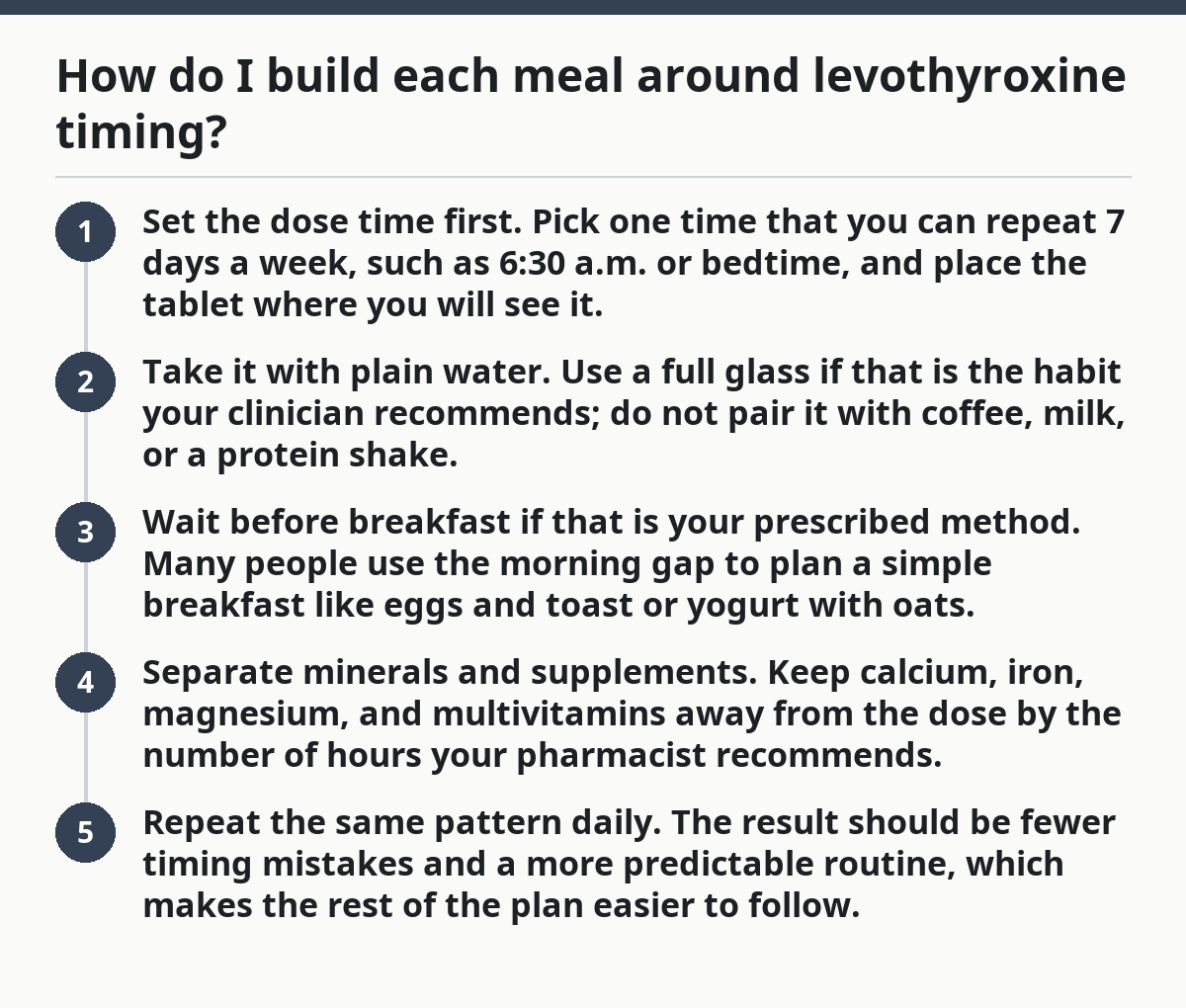
How do I build each meal around levothyroxine timing?
Take levothyroxine on a consistent schedule, then keep food and supplements out of that window exactly as your prescriber or pharmacist directed. For many people, that means taking the tablet with water and waiting before breakfast; for others, bedtime dosing works better if the timing is steady.
The medication piece is part of the meal plan, not a separate issue. A thyroid-friendly menu falls apart if the medicine is taken differently every day or paired with breakfast, coffee, calcium, or iron at random. Absorption can be sensitive to timing, so the routine matters more than perfect food choices.
A clean daily sequence looks like this:
- Set the dose time first. Pick one time that you can repeat 7 days a week, such as 6:30 a.m. or bedtime, and place the tablet where you will see it.
- Take it with plain water. Use a full glass if that is the habit your clinician recommends; do not pair it with coffee, milk, or a protein shake.
- Wait before breakfast if that is your prescribed method. Many people use the morning gap to plan a simple breakfast like eggs and toast or yogurt with oats.
- Separate minerals and supplements. Keep calcium, iron, magnesium, and multivitamins away from the dose by the number of hours your pharmacist recommends.
- Repeat the same pattern daily. The result should be fewer timing mistakes and a more predictable routine, which makes the rest of the plan easier to follow.
If a person struggles to remember the medication, a phone alarm and a pill organizer can help. The downside of a “roughly the same time” approach is that it invites accidental overlap with food or supplements. This is one of those areas where precision helps more than willpower.
Reliable medication guidance from the American Thyroid Association and the NHS both emphasize consistent levothyroxine use and spacing from interfering substances. A pharmacist can also clarify the timing rules for a specific prescription.
A 7-day thyroid-friendly template
A 7-day thyroid-friendly template gives the week structure without forcing the same meal every day. The menu below keeps each day anchored by protein, vegetables, whole grains, and healthy fats, while leaving room for hunger, work hours, and leftovers.
Day 1
- Breakfast: Greek yogurt, berries, and oats
- Lunch: Chicken salad with mixed greens, cucumbers, tomatoes, olive oil, and a slice of whole-grain bread
- Dinner: Salmon, roasted broccoli, and brown rice
- Snack: Apple with peanut butter
Day 2
- Breakfast: Scrambled eggs, spinach, and whole-grain toast
- Lunch: Lentil soup with a side salad
- Dinner: Turkey or tofu stir-fry with vegetables and quinoa
- Snack: Cottage cheese or a handful of nuts
Day 3
- Breakfast: Overnight oats with chia seeds and fruit
- Lunch: Tuna on whole-grain crackers with carrots and hummus
- Dinner: Chicken, sweet potato, and green beans
- Snack: Pear and walnuts
Day 4
- Breakfast: Smoothie made with yogurt or milk, fruit, and nut butter
- Lunch: Bean and vegetable bowl with rice and avocado
- Dinner: Baked cod, asparagus, and a baked potato
- Snack: Celery with hummus
Day 5
- Breakfast: Omelet with mushrooms and peppers
- Lunch: Leftover cod or chicken over greens with olive oil dressing
- Dinner: Beef, tofu, or chickpea chili with a side of vegetables
- Snack: Orange and pumpkin seeds
Day 6
- Breakfast: Oatmeal topped with berries and a spoon of nut butter
- Lunch: Turkey wrap with lettuce, tomato, and cucumber
- Dinner: Roasted chicken thighs, Brussels sprouts, and farro
- Snack: Yogurt
Day 7
- Breakfast: Eggs with avocado and fruit
- Lunch: Leftover chili or lentil soup with a salad
- Dinner: Shrimp or tofu tacos on corn tortillas with cabbage slaw
- Snack: Banana with peanut butter
This menu is intentionally ordinary. That is the point. A good hypothyroidism meal plan does not need specialty shakes or a 10-step prep routine. It needs meals that can be repeated on a Tuesday night when energy is low.
The trade-off is variety versus simplicity. A more varied week can be more enjoyable, but a simpler week is usually easier to keep. If a person cooks only twice, this template still works by turning dinner leftovers into lunch the next day.
Which foods should I keep on hand for a thyroid-friendly week?
Keep a small, repeatable grocery list in the kitchen so the plan is easy to follow on tired days. A basic weekly basket can include 2 to 3 proteins, 4 to 6 vegetables, 2 whole grains, 2 healthy fats, and 3 to 4 fruit choices.
A useful baseline list looks like this:
- Protein: eggs, Greek yogurt, chicken, canned tuna, salmon, tofu, lentils, beans, cottage cheese
- Vegetables: spinach, broccoli, carrots, cucumbers, peppers, green beans, salad greens, asparagus
- Whole grains and starches: oats, brown rice, quinoa, whole-grain bread, whole-wheat wraps, potatoes, sweet potatoes
- Healthy fats: olive oil, avocado, nuts, seeds, peanut or almond butter
- Fruit: berries, apples, oranges, pears, bananas
The goal is not perfection. It is having 2 or 3 options for each meal so no one has to build dinner from a nearly empty fridge. A can of beans, a bag of frozen vegetables, and a box of brown rice can save a night that would otherwise become takeout or skipped meals.
Frozen vegetables deserve a place here. They are cheap in the ordinary sense of the word, quick to cook, and usually good enough for soups, stir-fries, and bowls. Canned fish and beans work the same way. When the schedule is tight, convenience can keep the plan alive.
A common mistake is shopping for a week of recipes instead of a week of ingredients. That usually leaves half-used herbs, three sauces, and no actual dinner. The better move is to buy foods that can appear in more than one meal. Chicken can become lunch salad, dinner rice bowls, or soup. Beans can become chili or a taco filling.
If the kitchen budget is limited, this is where the plan becomes practical rather than idealized. A thyroid-friendly week can be built from eggs, oats, rice, beans, frozen vegetables, yogurt, and fruit without turning into an expensive project.
Common mistakes that make the plan harder to follow
The biggest mistakes are skipping protein, letting medication timing drift, and treating every meal like a special event. Those habits cost energy, attention, and consistency, and they are worth flagging before the week starts.
Skipping protein at breakfast is a common one. A bowl of toast or cereal alone may be quick, but it often leaves a person hungry before lunch. Adding eggs, yogurt, cottage cheese, tofu, or nut butter changes the shape of the meal.
Another mistake is packing too many refined carbs into one day. A lunch of white bread, chips, and soda may feel easy, but it does not hold hunger well. Swapping in whole grains, vegetables, and a protein source makes the day easier to manage.
Medication timing errors can be subtle. A person may think the dose is “close enough” to breakfast, coffee, or a supplement, then wonder why the routine feels unreliable. The fix is boring but effective: same time, same setup, fewer moving parts.
A final mistake is overcomplicating the menu. A 14-ingredient dinner is less likely to happen than a sheet-pan chicken meal with broccoli and potatoes. Simpler meals are not lesser meals. They are meals that actually get eaten.
This plan is not for someone who needs a medically tailored diet for advanced kidney disease, uncontrolled diabetes, severe food allergies, or a swallowing problem. Those situations need individualized advice from a clinician or dietitian, because the right food pattern changes when another condition sits on top of hypothyroidism.
The honest trade-off is that a simple template will not solve every symptom. If fatigue, constipation, hair loss, or weight changes remain severe, the meal plan is only one part of the picture and should be discussed with a healthcare professional.
What makes this plan worth repeating for 7 days
This plan is worth repeating because it solves the daily question of “What should I eat?” without demanding a new recipe every night. It gives the week a rhythm: medication, protein-rich meals, vegetables, a whole grain, and a sensible snack.
That rhythm matters more than chasing a perfect thyroid diet. Many people do better when the meal plan is repeatable, not restrictive. A steady routine also makes grocery shopping simpler, because the cart contains a short list of foods that can be mixed in different ways.
The strongest version of this template is the one a person can keep using after the first week. If breakfast is the weak spot, choose two breakfasts and alternate them. If lunch is the hardest meal, cook extra dinner on purpose so there is always a next-day option. If snacks are where the day falls apart, keep 2 or 3 reliable options visible.
A meal plan for hypothyroidism should feel like a tool, not a test. The win is not eating flawlessly for 7 days. The win is making the week easier to live through, one ordinary meal at a time.
What is a good meal plan for hypothyroidism?
A good meal plan for hypothyroidism is one that pairs protein, vegetables, whole grains, and healthy fats in a repeatable way. It should also fit the person’s levothyroxine schedule so meals do not interfere with medication timing. A practical version is one that can be followed for a full week without feeling punishing.
Can you give me a thyroid-friendly weekly menu?
Yes. A thyroid-friendly weekly menu can be as simple as yogurt and oats for breakfast, salads or grain bowls for lunch, and fish, chicken, tofu, beans, or eggs for dinner. A 7-day template works well when meals are built from the same grocery list and leftovers are used on purpose.
What should I eat in a day with hypothyroidism?
A day with hypothyroidism can start with a protein-rich breakfast, followed by a lunch that includes vegetables and whole grains, then a dinner with a solid protein portion and a vegetable side. Snacks like fruit with nuts, yogurt, or hummus with vegetables can help bridge the gaps. Medication timing should stay consistent with your prescriber’s instructions.
Drafted with AI; not yet reviewed by a person.