Last updated: November 20, 2026
Quick Answer: Yes—sometimes, but only for the specific levothyroxine product and only if a pharmacist confirms it.
Key Takeaways
- Some levothyroxine tablets can be split, but only the exact product and pharmacist guidance make it appropriate.
- Uneven halves can change how much medicine reaches the dose.
- Use a tablet splitter, a clean surface, and one tablet at a time.
- Crushing makes powder loss and transfer problems more likely.
You can sometimes split levothyroxine tablets, but crushing changes dose delivery more than many people expect, and that can matter. If swallowing is hard, speak with a qualified professional about the exact tablet you have before you change how it’s taken. For Can You Split or Crush Levothyroxine Tablets? What Changes Dose Delivery, the safest answer is product-specific, not one-size-fits-all.
The sections below sort out which tablets can be split, when crushing is a bad fit, and what to check so the dose stays as close as possible to the product you were given.
Can you split levothyroxine tablets?
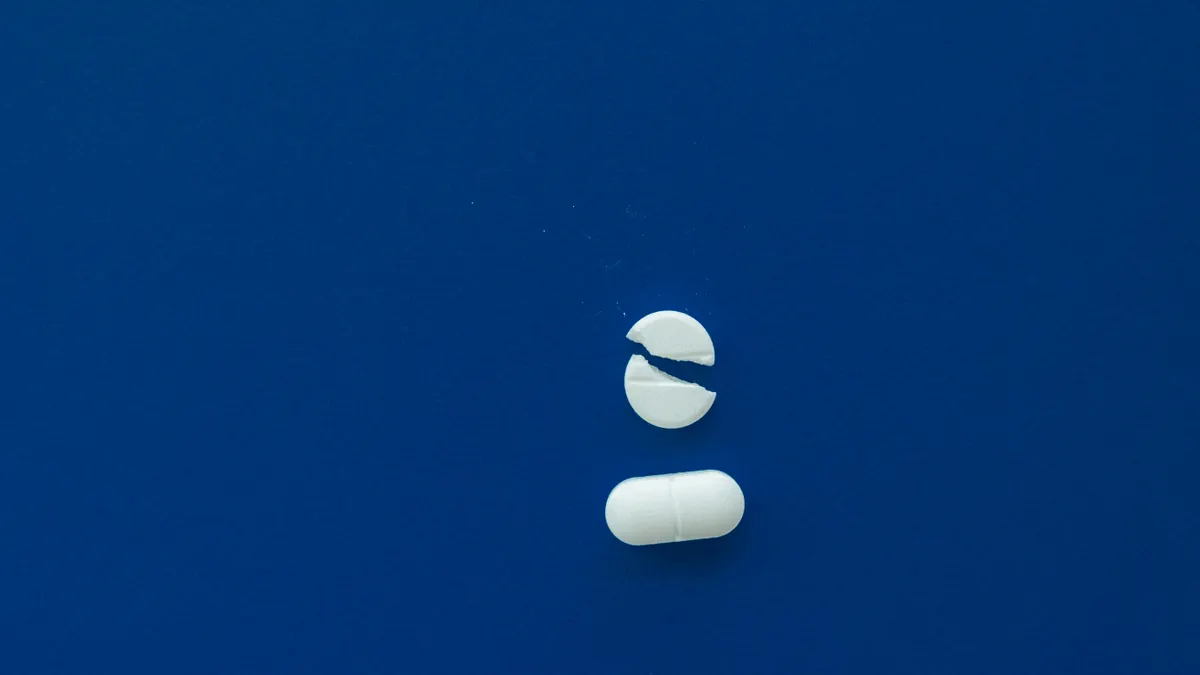
You can split some levothyroxine tablets, but only when the specific product is made for it and your pharmacist says the tablet is suitable. Levothyroxine is a narrow-margin medicine, so a cracked tablet, uneven halves, or a dusty split can change what gets taken up.
The broader evidence base is large: 958 PubMed records matched this topic for 2016–2026, read from a widened query because the exact question had too little published on it; the 100 most relevant were sampled and the figures below were computed from those records on 2026-11-02 using PubMed (NCBI). That wider literature helps explain the caution, even when it does not answer one brand name on its own.
- Tablets with a scored line are more likely to split cleanly than unscored tablets.
- A tablet splitter usually gives a cleaner break than fingers or a knife.
- Split only one tablet at a time; don’t pre-split a week’s supply unless a pharmacist says the product stays stable that way.
- If the half crumbles, the dose is no longer predictable.
Picture this: you’re staring at a small tablet, a low-dose prescription, and a pill box that needs half-tablets to work. The question is not just “can it break?” It’s “will the half still deliver the same amount the label promised?”
- Check the tablet imprint and score.
- Ask the pharmacist whether that exact manufacturer can be split.
- Use a splitter, not a blade.
- Inspect both halves before you take one.
What changes dose delivery when a tablet is split?
Splitting can change dose delivery because the active drug may not be perfectly even from one half to the other. In plain terms, a half-tablet is only useful if the split is neat and the tablet was made to divide evenly in the first place.
Levothyroxine tablets can also vary by formulation, strength, and manufacturer. Some products use fillers and compression patterns that split well; others chip, powder, or leave one side heavier than the other. That matters when the medicine is meant to be consistent day after day.
A few practical details drive the risk:
- Score line: A score is a groove meant to guide splitting, not a guarantee of equal halves.
- Fines: The tiny powder left behind in the splitter or on the counter is lost dose.
- Coating: A film coat can crack and make the break messy.
- Tablet size: Very small tablets are hard to split accurately, even with a splitter.
On the flip side, a clean split is often better than guessing at a new strength without guidance. If the reason for splitting is to match a prescribed half-strength, the goal is consistency, not convenience.
How do you split levothyroxine tablets safely?
You split levothyroxine tablets best with a tablet splitter, a clean surface, and a single tablet at a time. The method is simple, but the details matter because a rough break can waste powder and leave uneven halves.
- Confirm the exact tablet — check the prescription label and the tablet imprint; verify the manufacturer or strength if the pharmacist provided it; stop if the tablet is unscored and the label or leaflet warns against splitting.
- Use a tablet splitter — place one tablet in the V-shaped guide; verify it sits flat; if it rocks or slides, don’t force the cut.
- Close the splitter in one motion — press evenly until the blade meets the tablet; verify the break is clean; if the tablet shatters or chips badly, discard the fragments and ask about another strength.
- Inspect both halves — look for a near-equal split and no large crumbs; verify each half looks usable; if one half is visibly tiny, the split is not reliable.
- Take one half right away — use only the half you need if that’s the plan; verify the other half is stored only if your pharmacist says that product can be kept split.
- Keep the work area dry — moisture can make the tablet stick and crumble; verify the splitter and counter are dry; if the tablet softens, don’t continue.
- Clean the splitter after use — tap out powder and wipe it clean; verify no residue remains in the blade or cup; if residue builds up, dose loss becomes more likely.
- Ask before changing strength — if you are splitting because the current strength is awkward, ask a pharmacist about a tablet strength that fits better; verify that any change preserves the same prescribed total dose pattern.
A good split is quick and tidy. A bad one leaves dust, uneven chunks, and a dose that you can’t trust.
Can you crush levothyroxine tablets?
You can crush some levothyroxine tablets, but crushing is a weaker choice than splitting and is often a bad fit unless a pharmacist or prescriber has already confirmed that the product can be crushed. Crushing turns a tablet into powder, which raises the risk of lost dose and messy transfer.
The main issue is not just swallowing; it is dose integrity. Powder sticks to cups, spoons, paper, and teeth. If a tablet is crushed and then only part of the powder is swallowed, the amount taken can drift from day to day.
A few forms need extra caution:
- Modified-release or special-release tablets should not be crushed unless a qualified professional says the specific product allows it.
- Coated tablets may lose their intended handling properties when crushed.
- Very low-strength tablets can become impractical because tiny powder losses matter more.
The best answer is not always “crush it.” A pharmacist may know whether a different strength, a different tablet, or a dissolving tablet is a better fit for the same medicine.
What if you cannot swallow thyroid pills?
You have other options, but they depend on the exact product and what your pharmacist can confirm. Some levothyroxine products are designed to be dispersed or dissolved, while others are not; the label matters more than habit here.
Dissolving tablets and oral syringes can be useful in people who have a swallowing problem, but they are not interchangeable with every standard tablet. The way the medicine is measured and taken up can change with the vehicle, the timing, and how much liquid remains in the cup or syringe.
Picture this: you’re trying to make a tablet fit a problem it wasn’t designed for. The safer move is to ask what the tablet can do, not to force the tablet into a new job.
- Ask the pharmacist whether your exact levothyroxine can be dissolved or dispersed.
- Ask whether a different strength or formulation is available.
- If an oral syringe is involved, confirm the measured volume and the rinse step.
- If the tablet leaves residue, don’t assume the full dose made it in.
When splitting or crushing is the wrong move
Splitting or crushing is the wrong move when the tablet does not reliably break, when the label says not to alter it, or when the dose has to stay very steady. In those cases, the cleaner answer is a different strength or formulation, not a modified tablet.
The tablet is unscored and crumbles: That means the split will be uneven — use a different strength and ask a pharmacist for a better fit.
The tablet is coated or special-release: Crushing can change how the medicine behaves — do not alter it; ask about a product meant for swallowing difficulty.
You need exact daily consistency: Powder loss and uneven halves can matter more here — use the manufactured strength if possible.
You cannot keep track of halves: Mixed crumbs and stored fragments raise error risk — switch to a whole-tablet plan or a different formulation.
The tablet changes color, shape, or imprint between fills: That can mean the manufacturer changed — verify before splitting the next batch.
On a high-stakes medicine, “close enough” is not a good rule. Not even close.
The mistakes people make most often
The most common mistake is treating every levothyroxine tablet like it splits the same way. Different strengths and manufacturers can behave differently, and a habit that worked last month may fail with the next refill. When in doubt, consult a pharmacist or prescriber before changing the tablet.
- Using a kitchen knife — this chips the tablet and wastes powder; use a tablet splitter instead.
- Splitting several tablets at once — this leads to mixed crumbs and confusion; split one at a time.
- Crushing without checking the product — this can ruin dose delivery; confirm with the pharmacist first.
- Guessing at the half — eyeballing a broken tablet invites uneven dosing; use the cleanest half or a different strength.
- Ignoring a changed imprint or shape — a new manufacturer may split differently; verify before repeating the old method.
The first 100 relevant PubMed records in the wider subject were mostly reviews: 22 were tagged Review, 3 Observational Study, 3 Systematic Review, 1 Clinical Trial, 1 Meta-Analysis, and 1 Randomized Controlled Trial, all from PubMed (NCBI) and computed on 2026-11-02. That mix is a clue: a lot of the guidance comes from synthesis and practice, not from one perfect trial on one tablet.
What a pharmacist can check that you cannot
A pharmacist can check whether the exact levothyroxine product is suitable for splitting, crushing, or dissolving in a way that a package insert often cannot make obvious to a patient. That includes the manufacturer, the tablet design, and whether a different strength is easier to use.
This matters because formulation differences are real. Across the 13 registered trials matching this subject on ClinicalTrials.gov, 4 were completed, 3 recruiting, 2 active not recruiting, and 2 unknown; median planned enrolment was 108 participants, with a range from 18 to 1,278, and the figures were computed from the first 13 records read on 2026-11-02. That doesn’t give a bedside rule, but it shows how fragmented the evidence can be.
Use the pharmacist as the final check when:
- the tablet looks different from the last refill
- the dose depends on a half-tablet
- swallowing difficulty has become a regular problem
- the tablet crumbles in the splitter
- the label or leaflet is unclear about alteration
The truth is, a good pharmacy answer often saves time and avoids a dose problem before it starts.
Can I cut levothyroxine in half?
You can sometimes cut levothyroxine in half, but only if the specific tablet is suitable for splitting and the halves stay reasonably even. A scored tablet and a tablet splitter help, but they do not make every product safe to split. If the tablet crumbles or the manufacturer changes, check again with a pharmacist.
Can I crush levothyroxine tablets?
You can sometimes crush levothyroxine tablets, but it is often a poor choice because powder loss can change dose delivery. Crushing should only happen if the exact product is known to be crushable and a qualified professional has confirmed the plan. If swallowing is the problem, ask about dissolving tablets or another formulation instead.
What if I cannot swallow thyroid pills?
You should ask a pharmacist about a formulation that fits swallowing difficulty rather than forcing a tablet to behave differently. Some tablets can be dispersed or dissolved, and an oral syringe may help with measured liquid administration. The exact product matters, so the label and manufacturer should be checked before you change how it is taken.
Drafted with AI; not yet reviewed by a person.