
Last updated: November 19, 2026
Quick Answer: If you suspect a mineral deficiency but standard labs look normal, ask for a symptom-guided deficiency workup that looks beyond one iron panel or a single serum value. The most useful next step is usually ferritin, inflammation, and any mineral tests that can miss deficiency when the blood level looks fine. This article focuses on What to Ask for If You Suspect a Mineral Deficiency but Labs Look Normal.
If you suspect a mineral deficiency but standard labs look normal, ask for a deficiency workup that goes beyond one iron panel or a single serum value. The most useful next step is usually a symptom-guided review of ferritin, inflammation, and any mineral tests that can miss deficiency when the blood level looks fine. For background on lab interpretation, see the NIH Office of Dietary Supplements fact sheets on iron, zinc, and magnesium.
What a useful deficiency workup actually tries to answer
A useful deficiency workup tries to answer two separate questions: is there a low mineral reserve, and is the lab being distorted by inflammation, timing, or the wrong test? That distinction matters because a “normal” serum value can hide an iron, zinc, or magnesium problem, especially when symptoms have been going on for weeks or months.
The phrase “deficiency workup” should mean more than repeating the same test and hoping for a different result. In a real clinic visit, the workup should line up symptoms with the mineral most likely to be involved. Fatigue, brittle nails, hair shedding, restless legs, poor wound healing, muscle cramps, appetite change, or frequent infections do not all point to the same deficiency, and they do not all come from the same lab panel.
This is also where the limits of lab medicine show up. Serum mineral levels can stay in range while the body’s stores are low, or while inflammation has pushed values around. That is why a normal result on one visit does not automatically close the case. It may simply mean the test chosen was too blunt for the question.
If the main concern is a mineral problem tied to thyroid symptoms, the broader testing strategy belongs under the hub on thyroid nutrient testing and deficiency decisions. This page stays focused on the “labs look normal, but something still seems off” problem.
The most useful question to bring into the appointment is simple: “What test would show a low store, not just a circulating level?” For iron, that is often ferritin. For zinc and magnesium, the answer is less clean, which is exactly why the next section matters.
Which labs are most worth asking about first?
Ferritin is usually the first iron-related lab to ask about, and it is often more useful than serum iron alone. Ferritin reflects stored iron, while serum iron can swing with meals, time of day, recent supplements, and illness. If symptoms suggest iron deficiency but the CBC and serum iron look fine, ferritin is the test that most often changes the conversation. The NIH notes that ferritin is a key marker of iron stores. [1]
For iron, ask whether the workup should include ferritin, a complete blood count, and sometimes transferrin saturation or total iron-binding capacity. The exact combination depends on the story. A normal hemoglobin on its own does not rule out depleted iron stores. People can feel symptoms before anemia shows up.
For zinc, ask which test the clinician uses and what its limits are. Serum zinc exists, but it is affected by fasting state, infection, recent food intake, and even how the sample is handled. A normal zinc number does not necessarily mean zinc status is adequate at the tissue level, and the test is less decisive than many readers expect. NIH says plasma zinc is affected by multiple factors. [2]
For magnesium, ask whether the concern is serum magnesium or a different assessment. Serum magnesium is common, but it represents only a small fraction of the body’s magnesium. A normal serum result can miss intracellular depletion, especially when symptoms are muscle cramps, twitching, palpitations, or poor sleep. Some clinicians may discuss red blood cell magnesium, but this is not a perfect fix either; it is simply a different window, not a gold standard. The NIH magnesium fact sheet also notes that serum levels do not necessarily reflect total body magnesium. [3]
If inflammation is part of the picture, ask for markers that help interpret the result, and consult a professional about whether CRP or another marker should be checked with ferritin. C-reactive protein, or CRP, is a common example. Inflammation can raise ferritin, which can make iron stores look better than they are. That one issue alone explains why a “normal” ferritin may need context. The CDC also uses ferritin with inflammation markers in iron assessment. [4]
A practical first ask is this: “Can we check ferritin and inflammation together so the iron result is easier to interpret?” That question shows you are not asking for random tests. You are asking for a more honest read.
What to ask for if iron still seems wrong
If iron feels like the right suspect, ask for ferritin first, then ask how inflammation changes the reading. Iron deficiency is the mineral problem most likely to be masked by a normal-looking blood count, and ferritin is the test most likely to catch the low-store stage before anemia appears.
The core questions are these: Is ferritin low enough to support iron depletion? Is the CBC showing early clues such as low mean corpuscular volume or rising red cell distribution width? Is transferrin saturation low even if serum iron changes from day to day? These are the details that separate “maybe iron is the problem” from “iron is probably not the answer.”
Here is a practical order for the discussion:
- Ask for ferritin, not just serum iron. The result gives a better picture of stored iron and may explain symptoms even when hemoglobin is still normal.
- Ask whether a CBC should be reviewed at the same time. A normal hemoglobin can miss early deficiency, but the red cell indices may still show a pattern.
- Ask whether CRP or another inflammation marker should be checked with ferritin. If inflammation is present, ferritin may be falsely reassuring.
- Ask whether transferrin saturation or total iron-binding capacity would make the result clearer. These can help when iron traffic is abnormal but the storage number is hard to trust.
- Ask what would count as a repeat test interval if the result is borderline. A 6- to 8-week follow-up is often discussed, though the exact plan depends on symptoms and treatment, and you should confirm the timing with a clinician and reliable guidance. [1][4]
The trade-off is that more iron testing does not automatically solve the case. If ferritin is normal and inflammation is not present, iron becomes a weaker explanation, and the workup should move on instead of circling the same panel. That is the point where too much iron chasing can waste time and delay the real answer.
A useful sentence in the room is: “If ferritin is normal, what finding would make you still think iron is the issue?” If the answer is vague, ask what would change that judgment on the next draw.
What to ask for if zinc or magnesium is still on the table
If zinc or magnesium is still a serious possibility, ask which test can actually move the decision and what its blind spots are. These minerals are harder to assess than iron, and a normal serum result can be less persuasive than many people think.
For zinc, ask whether serum zinc will be drawn fasting and whether any recent infection or supplement use could skew it. Zinc status is one of the cases where pre-analytic details matter a lot. A blood draw taken after a meal, after an acute illness, or after a zinc-containing supplement can be misleading. If the lab is being used to support or reject zinc deficiency, those variables should be named out loud. The NIH notes that zinc status is influenced by infection and other factors. [2]
For magnesium, ask whether serum magnesium is enough for your situation or whether the clinician wants a different measure. A person with cramps, twitching, constipation, or sleep disruption may still have a low magnesium reserve even when serum magnesium is in range. That does not mean every symptom is magnesium-related; it means the test is limited. If the result is normal and the symptoms still fit poorly, ask what other explanation is more likely. The NIH also notes that serum magnesium is not a full measure of body stores. [3]
This is also the section where supplement trial questions belong, but carefully. A short, monitored trial may be more informative than repeated vague testing in some cases, especially when the lab is not decisive. Since a supplement trial can be informative, consult a professional about whether it makes sense in your case and how to interpret it. Still, a supplement trial should not be treated as proof. Feeling better after a magnesium product does not prove magnesium deficiency. The change could come from sleep, bowel effects, or placebo response.
What should you ask? “If this test comes back normal, how much weight should I give it?” That question forces the clinician to say whether the result is strong evidence or weak evidence. In mineral workups, that distinction matters more than the number itself.
How to bring the question to your doctor without getting brushed off
You will get a better answer if you ask for a pattern review instead of a single test. The discussion often starts best with a symptom list, a timeline, and one or two targeted questions about interpretation. That approach is faster than asking for “everything” and more credible than asking for one mineral because an internet list sounded right.
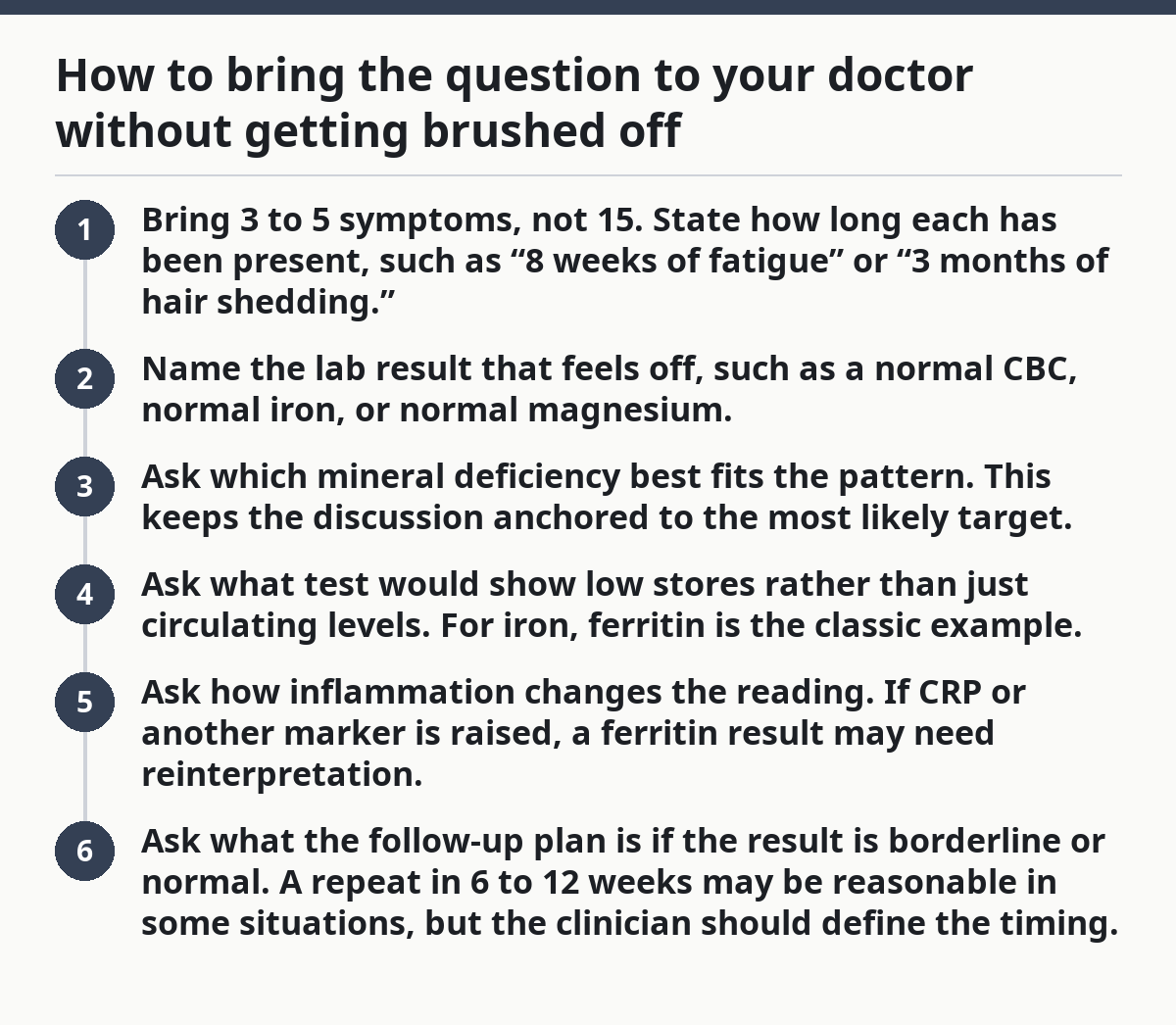
Use a short script and keep it concrete:
- Bring 3 to 5 symptoms, not 15. State how long each has been present, such as “8 weeks of fatigue” or “3 months of hair shedding.”
- Name the lab result that feels off, such as a normal CBC, normal iron, or normal magnesium.
- Ask which mineral deficiency best fits the pattern. This keeps the discussion anchored to the most likely target.
- Ask what test would show low stores rather than just circulating levels. For iron, ferritin is the classic example.
- Ask how inflammation changes the reading. If CRP or another marker is raised, a ferritin result may need reinterpretation.
- Ask what the follow-up plan is if the result is borderline or normal. A repeat in 6 to 12 weeks may be reasonable in some situations, but the clinician should define the timing.
The cost of a vague request is that it often produces a vague answer. “Check everything” can lead to broad panels that still miss the point. The cost of an overly narrow request is that it can anchor the visit to the wrong mineral. The better move is to ask for the logic behind the test: why this test, why now, and what would change the plan?
If you need a single sentence, use this: “My symptoms still make me wonder about iron, zinc, or magnesium—what tests would best show a deficiency if the standard labs are normal?” That sounds specific because it is specific. For related guidance, see the NIH pages on iron, zinc, and magnesium.
What normal labs can miss, and when to stop chasing them
Normal labs can miss early deficiency, inflammation-distorted results, and mineral problems that live outside the blood compartment. That is why a normal result should end uncertainty only when it fits the symptoms, the exam, and the rest of the labs.
The most common miss is iron deficiency without anemia. Another is ferritin that looks acceptable but is raised by inflammation. Zinc can also be hard to read because serum levels shift with infection, meals, and supplement timing. Magnesium is especially frustrating because the serum test may not reflect total body status well.
The limit of any workup is that symptoms are not specific. Fatigue, hair loss, muscle cramps, and poor sleep can come from many causes besides mineral deficiency. That is why a good workup asks what else has been checked already, not just which mineral is next. If the pattern does not fit after a targeted review, it is better to stop chasing a mineral and look elsewhere than to keep repeating a test with weak explanatory power.
A clean stopping point is when the likely mineral has been checked with the right kind of test, inflammation has been considered, and the result does not match the symptom story. At that point, more testing should have a reason. If there is no reason, the next test is probably just a delay.
The right goal is not to force a deficiency diagnosis. It is to avoid missing one when standard labs are too blunt. That is the difference between careful medicine and lab-driven guessing.
Key Takeaways
- A normal standard lab may not rule out low iron stores or a mineral problem.
- Ferritin is often the most useful first ask when iron still seems suspicious.
- Inflammation can blur the meaning of ferritin and other labs, so context matters.
- Zinc and magnesium are harder to read than many people expect, and serum results can miss real problems.
- The best doctor conversation asks what test would show low stores, what inflammation might be doing, and what follow-up would change the plan.
Can deficiencies exist with normal bloodwork?
Yes, they can. A normal blood test may miss early iron depletion, inflammation-distorted ferritin, or mineral status that is not well reflected in serum levels. That is why symptoms, timing, and the specific test matter as much as the number.
What labs miss mineral deficiency?
Serum iron, serum zinc, and serum magnesium can miss or blur deficiency, depending on the situation. Ferritin is usually more useful for iron stores, but even ferritin can be distorted by inflammation, so a single result should not be treated as the whole story.
How do I ask my doctor for more testing?
Ask for a symptom-guided deficiency workup rather than a broad panel. A direct sentence works best: “My symptoms still make me wonder about iron, zinc, or magnesium, and the standard labs do not explain them—what tests would best show a deficiency, and how would inflammation affect the result?”
Drafted with AI; not yet reviewed by a person.