Last updated: November 19, 2026
Key Takeaways
- Keep levothyroxine in your carry-on, use original packaging if possible, and bring extra tablets for delays.
- The timing problem is usually the clock change, not the time zone itself.
- Store levothyroxine in a dry hotel spot at room temperature, away from heat, windows, and the bathroom sink.
- Small travel mistakes usually disrupt timing, not cause catastrophe.
Traveling with levothyroxine works best when the medicine stays in your carry-on bag, stays dry, and stays on a clock that you have already planned for the time zone change. In this guide to How to Travel with Levothyroxine: Packing, Temperature, and Time Zone Tips, the routine is simple in principle, but it can go wrong if you split doses between bags, leave tablets in a hot car, or improvise the timing after a long flight. If your schedule is complicated, or if you have any change in thyroid symptoms, speak with a qualified clinician about your own situation before you go.
Who this routine is for — and who should get advice first

This routine is for people who already take levothyroxine on a regular schedule and want a practical way to keep that schedule while flying, driving, cruising, or staying in a hotel room. It assumes you know your usual tablet strength, your usual timing, and whether your pills are kept in a bottle, blister pack, or a pill organizer. It also assumes you can plan at least 1 day ahead, which is enough time to sort packaging, extra tablets, and alarms.
The standard approach is not for every traveler. If you are starting levothyroxine for the first time, changing brands, dealing with a recent thyroid lab change, or have a narrow window for medication timing because of other medicines, get individualized guidance before travel. The same is true if your trip crosses multiple time zones, includes overnight flights, or puts you in places where you may not have easy access to a pharmacy. A travel plan should fit the person, not the other way around.
A useful way to think about the problem is that levothyroxine is a routine medicine, not a “just remember it somehow” medicine. The timing matters enough that it deserves a plan, but it does not require elaborate packing. A small, repeatable system usually works better than a complicated one. A PubMed search on levothyroxine timing turns up a mix of reviews and original studies, which is enough to show that timing remains an active topic in the literature. That does not tell a traveler exactly what to do, but it does show that timing remains an active topic in the literature.
Pack levothyroxine like you pack a passport: in carry-on, not in checked baggage
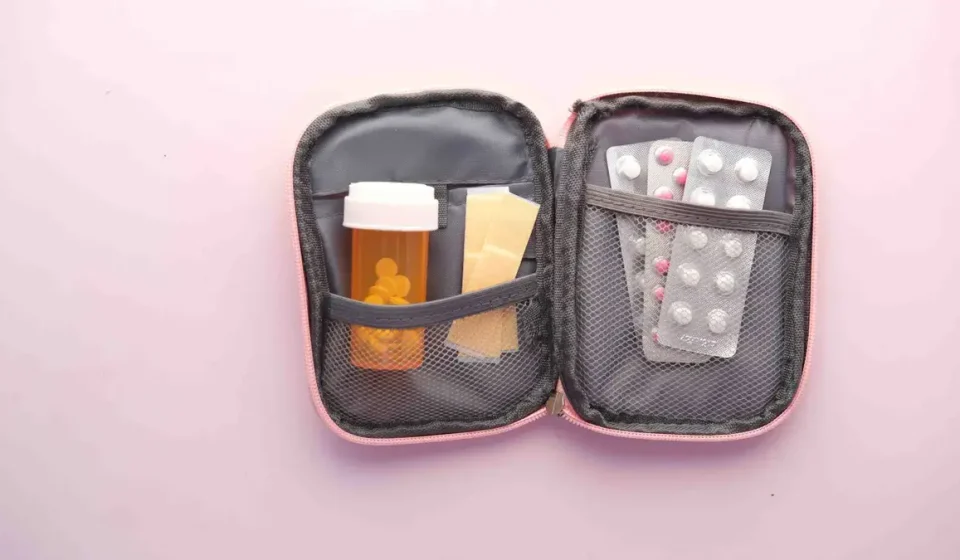
Put levothyroxine in your carry-on bag, keep it in original packaging if you can, and pack at least a small buffer of extra tablets in case the trip runs long. Carry-on storage matters because checked baggage can be delayed, exposed to temperature swings, or separated from you for hours. A blister strip or pharmacy bottle also makes security screening easier because the label identifies the medicine without you having to explain it from memory.
Here is a practical packing sequence that keeps the medicine organized without turning the whole trip into a pharmacy project:
- Put the current supply in your carry-on the night before you leave. Use the bag you will actually keep with you on the plane or in the car, not a bag that may get checked. Verify that the bottle, blister pack, or organizer contains the tablets you need for the trip. A problem is a medicine left in checked luggage or in a suitcase that goes missing.
- Keep the tablets in original packaging when possible. The pharmacy label helps with identification, and the original container protects tablets from crushing and humidity better than loose storage. Verify that the label is readable. A problem is repacking into an unlabeled container that may confuse security staff or create mix-ups.
- Separate the travel supply from the home supply only if the backup is clearly labeled. For example, place a small labeled backup bottle in a different pocket of the same carry-on. Verify that you can tell the two apart at a glance. A problem is duplicating bottles without a clear system and later losing track of which one you opened.
- Add extra tablets for the trip length plus a cushion. The exact cushion is personal and should be set with a clinician or pharmacist if your trip is complex. Verify that the count covers the entire itinerary, including return travel. A problem is packing exactly the planned number and then missing a dose because of a delay.
- Protect the medicine from pressure and spills. Keep it away from toiletries, sunscreen, and liquids in the carry-on. Verify that the lid is tight and tablets are not rubbing against keys or chargers. A problem is crushed tablets or a wet container in a hot, crowded bag.
- Keep the medicine where you can reach it without unpacking your entire bag. A front pocket or an easy-access pouch works better than the bottom of a stuffed suitcase. Verify that you can reach it during a layover, on a train, or in a hotel lobby. A problem is delaying the dose because the tablets are buried under clothes.
- Write down the travel-day timing plan on paper or in your phone. Include the home time, destination time, and the rough hour when you expect to take the next tablet. Verify that the note is simple enough to read when you are tired. A problem is relying on memory after an overnight flight.
Security screening is usually straightforward when the tablets are in original packaging or a clearly labeled container. If an officer asks about the medicine, the label and your travel note make the conversation shorter. I do not recommend transferring every tablet into a plain organizer for the whole trip unless you have a strong reason and a clear labeling system, because organizers can be convenient but they remove some of the identifying information that a pharmacy bottle provides.
A practical trade-off is worth naming: a pill organizer is neat, but it is not always the best default for levothyroxine on travel days. If you use one, keep the original bottle somewhere accessible as backup. That is especially useful for hotel stays, where a drawer or nightstand is a better storage spot than a damp bathroom counter.
How do you keep levothyroxine on schedule across time zones?

You keep levothyroxine on schedule across time zones by deciding in advance which clock governs the dose: home time, destination time, or a travel-day bridge plan set with a clinician. The mistake is not the time zone itself; the mistake is changing the timing twice in one day because the plane crossed midnight.
A good travel-day plan starts before departure. If the trip crosses 1 or 2 time zones, many travelers can keep the usual daily rhythm with a modest shift in clock time, but the details vary with the departure and arrival times, the length of the flight, and other medicines. Studies suggest that levothyroxine timing can be sensitive to consistency, though the exact best routine varies by person and by the conditions of the study. That means the literature is short-term and mixed, which is why a one-size-fits-all rule is risky.
A workable method is this:
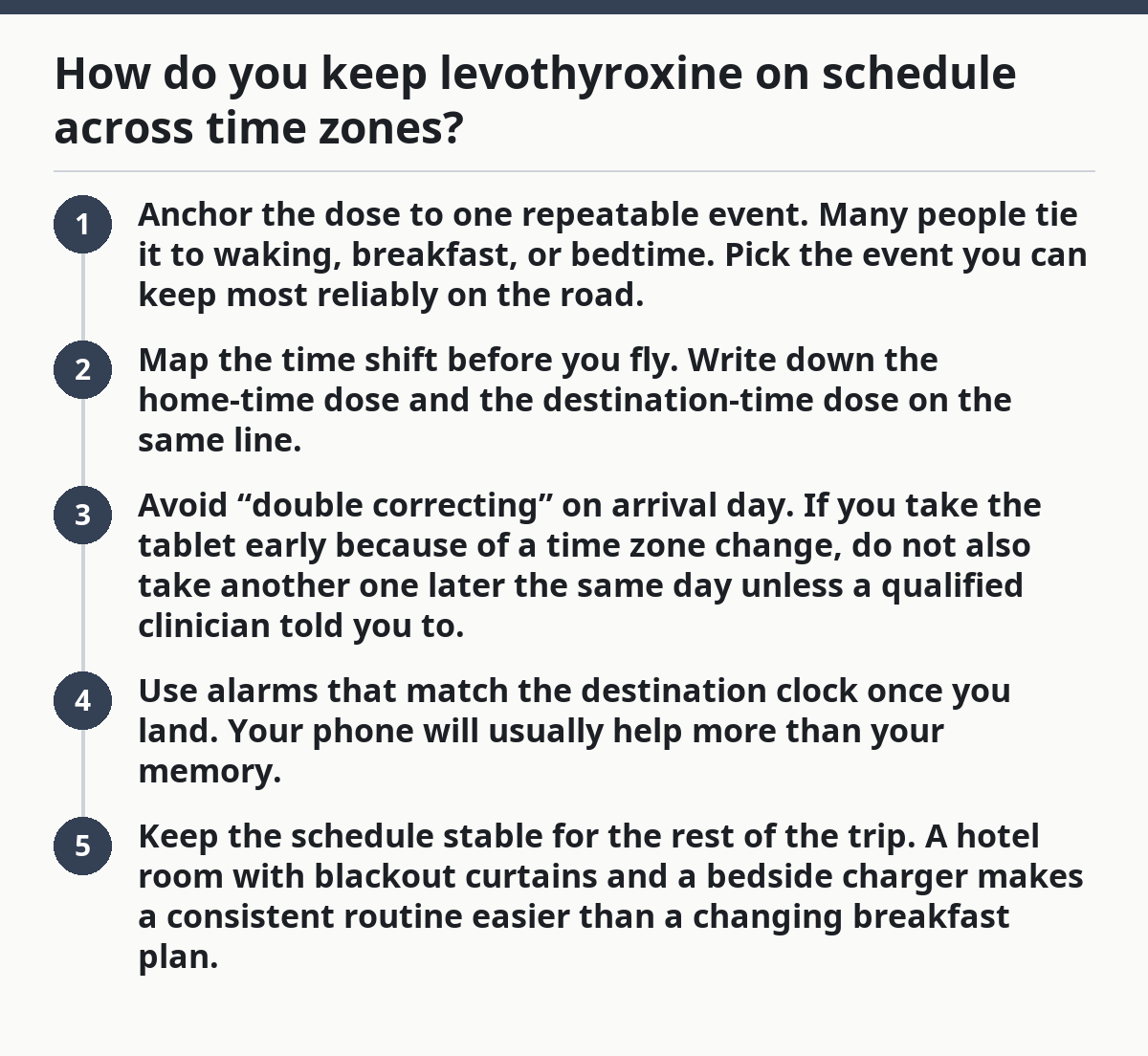
- Anchor the dose to one repeatable event. Many people tie it to waking, breakfast, or bedtime. Pick the event you can keep most reliably on the road.
- Map the time shift before you fly. Write down the home-time dose and the destination-time dose on the same line.
- Avoid “double correcting” on arrival day. If you take the tablet early because of a time zone change, do not also take another one later the same day unless a qualified clinician told you to.
- Use alarms that match the destination clock once you land. Your phone will usually help more than your memory.
- Keep the schedule stable for the rest of the trip. A hotel room with blackout curtains and a bedside charger makes a consistent routine easier than a changing breakfast plan.
This section is where travelers most often overcomplicate things. They assume they need to perfectly preserve home time, but in many cases the real goal is consistency and a safe, simple bridge between time zones. Even so, I would not advise improvising a major shift on a long international trip without professional input, especially if you also take calcium, iron, or other medicines that can affect absorption.
What should I do with levothyroxine in a hotel room?
Store levothyroxine in the hotel room at normal room temperature, dry, and away from heat sources, windows, and the bathroom sink. A bedside table or desk drawer is usually better than the bathroom, where steam and humidity spike after showers. If the room is hot, keep the bottle in the coolest dry area you have access to and ask the front desk if there is a safer storage option.
Temperature matters because tablets can degrade faster when they are repeatedly warmed, chilled, or exposed to moisture. You do not need a laboratory setup; you need to avoid obvious stressors. Leave the medicine out of direct sun, do not place it next to a portable heater, and do not tuck it into a car glove box for the day. Those are small habits, but they are the kind that preserve the tablet better than dramatic emergency measures.
A few hotel-specific habits help:
- Keep the bottle closed tightly after every use. A loose cap invites humidity.
- Do not store tablets next to the shower or sink. Bathrooms are convenient and wrong for storage.
- Use the same spot each day. A consistent location cuts down on missed doses.
- Check the tablet appearance once. If tablets are crushed, damp, or visually altered, do not guess about their condition; ask a pharmacist.
Because hotels add cleaning cycles, temperature changes, and hurried packing, the usual mistake is treating hotel storage like home storage. A small zippered pouch inside the carry-on or day bag can be a better home base than a bathroom shelf, especially on multi-city trips.
The mistakes people actually make, and what they cost
The most common travel errors are small, and they usually cost timing, not catastrophe. Still, a medicine routine that slips during a trip can create days of uncertainty and extra stress. The fix is usually simpler than the mistake.
- Checking the medication with luggage. If the bag is delayed, the tablets are delayed too. The correct alternative is to keep every dose in the carry-on bag.
- Repacking into an unlabeled container and leaving the original bottle at home. That can create confusion at security or in a hotel drawer. The correct alternative is to keep the label with the medicine or carry a backup label.
- Leaving tablets in a hot car, on a windowsill, or near a heater. Heat can stress the medication. The correct alternative is a cool, dry indoor spot, preferably inside your carry-on or hotel drawer.
- Changing the dose time twice in one day after crossing time zones. That creates a messy schedule and raises the chance of confusion later in the trip. The correct alternative is a single written plan before departure.
- Relying on memory instead of an alarm. Fatigue, jet lag, and airport delays make memory a weak tool. The correct alternative is a phone alarm tied to the destination clock.
- Forgetting to pack extra tablets. A delayed flight can turn a perfect plan into a scramble. The correct alternative is to travel with a clear buffer, especially on long trips or when connections are uncertain.
A hidden cost of these mistakes is not just the missed tablet. It is the mental load that follows: asking whether the dose was taken, whether the pills got too hot, whether the schedule should change again tomorrow. The more variables you remove before departure, the less you have to decide when tired.
When the standard approach does not apply
The standard approach needs modification if the trip is long, the schedule is unusual, or the medicine cannot be separated easily from other timing-sensitive pills. In those cases, the safest answer is not to improvise; it is to get a plan from a qualified clinician or pharmacist before departure.
More than a simple one- or two-time-zone shift: The timing gap becomes harder to reason through — Ask for a travel-day schedule instead of winging it.
You also take calcium, iron, bile-acid binders, or other medicines that may interfere with absorption: The spacing between medicines matters — Get a personalized timing plan before the trip.
Your trip includes several days with very early departures, late dinners, or night shifts: The usual “same time every day” pattern may be hard to hold — Build a realistic schedule around the actual itinerary.
You are switching brands, formulations, or tablet strengths close to departure: The routine is changing already — Avoid adding travel timing changes on top without guidance.
You have trouble swallowing tablets, need a pill organizer, or cannot keep medicine in original packaging for practical reasons: The storage method itself may need adjustment — Ask a pharmacist how to label and separate the tablets safely.
You notice a new symptom pattern while traveling, such as palpitations, marked fatigue, or unexpected sensitivity to timing changes: The travel routine may no longer match your needs — Seek medical advice rather than trying to self-correct the schedule.
This is the section where a generic article would wrongly say “just keep taking it as usual.” That advice is too thin for real travel. A good travel plan respects the medicine’s consistency and the trip’s messiness at the same time.
Levothyroxine travel routine: the shortest version that still works
The simplest effective routine is: keep levothyroxine in your carry-on, keep it cool and dry, write down the time-zone plan before you leave, and use a phone alarm so the schedule survives jet lag.
Drafted with AI; not yet reviewed by a person.