How to Eat for Thyroid Health If You Are Vegetarian

Last updated: November 20, 2026
Key Takeaways
- A vegetarian thyroid diet works best when it covers iodine, iron, protein, and B12 each week.
- Build meals by pairing protein, iron, and iodine across the day, then add vegetables, fruit, grains, and fats.
- The most useful vegetarian thyroid foods are iodized salt, dairy, eggs, beans, lentils, tofu, and fortified foods.
- Soy foods can fit a vegetarian thyroid diet, with attention to medicine timing and overall diet quality.
If you’re vegetarian and trying to eat for thyroid health, the main job is to cover iodine, iron, protein, and B12 without drifting into guesswork. Speak with a qualified professional about your own situation, especially if you already have thyroid disease, take thyroid medicine, are pregnant, or have a history of anemia. For a How to Eat for Thyroid Health If You Are Vegetarian plan, that is the starting line.
Below, the food choices, nutrient trade-offs, and meal-planning details are laid out plainly.
What a vegetarian thyroid diet needs to cover
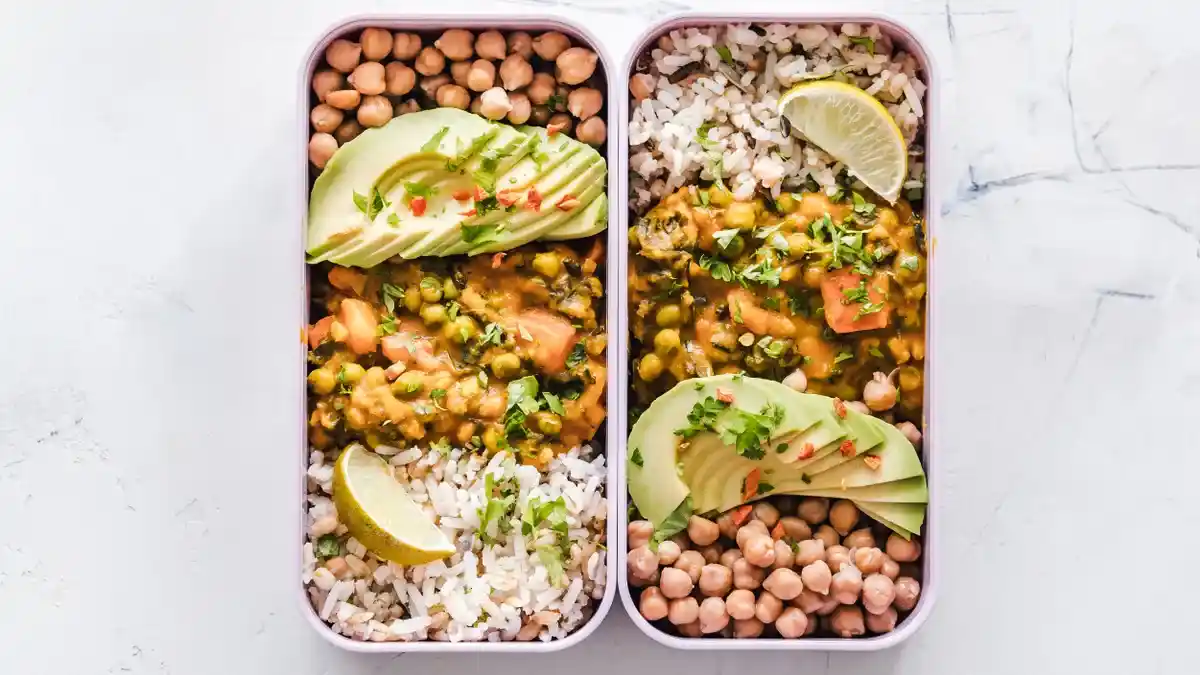
A vegetarian thyroid diet needs enough iodine, iron, protein, and vitamin B12 from foods you actually eat every week. That matters because thyroid hormone production depends on iodine, iron helps the body use that system well, and vegetarian diets can be light on B12 unless eggs or dairy are regular parts of the plate. According to the NIH Office of Dietary Supplements, adults need 150 mcg of iodine per day.
Not every vegetarian pattern looks the same. An ovo-lacto vegetarian who eats eggs and dairy has different options from a vegan who relies on beans, lentils, tofu, grains, nuts, and seeds.
- List your regular protein foods. Write down beans, lentils, tofu, tempeh, eggs, Greek yogurt, milk, paneer, and cheese if you use them.
- Check your iodine source. Note whether you use iodized salt, dairy, eggs, or sea vegetables.
- Check your iron source. Note lentils, chickpeas, beans, tofu, pumpkin seeds, fortified cereals, and dark leafy greens.
- Check your B12 source. Note eggs, dairy, or fortified foods; if none are regular, that is a gap.
- Check your meal pattern. Aim to include a protein food at each meal, not just dinner.
- Check your cooking habits. A pot of beans is not the same as a plate of beans plus vitamin C-rich food, which helps iron absorption.
- Check your label reading. Fortified foods vary a lot; some have B12 or iodine, many do not.
- Check your medication timing. If you take thyroid medicine, food timing can matter; follow the instructions from your prescriber or pharmacist.
What this does not do is diagnose a thyroid problem, and it does not replace personal advice from a clinician or pharmacist. It does, though, give you a clean way to spot the weak points in a vegetarian pattern before they stack up like dominoes.
How do you build thyroid-friendly vegetarian meals?
Build them by pairing a protein food, an iron source, and an iodine source across the day, then fill the rest with vegetables, fruit, grains, and fats. The goal is steady coverage, not one perfect food.
So the easiest method is to make each meal do one clear job. Start with protein, then add iron, then make sure iodine is not missing.
Picture this: breakfast bowl, lunch salad, dinner plate — all on the table, all supposed to work for thyroid health without meat. The fix is usually simple: add protein first, then make room for iodine and iron instead of hoping they show up by accident.
- Choose a protein base. Use tofu, beans, lentils, eggs, Greek yogurt, cottage cheese, milk, or soy foods at each meal; verify the meal has a real protein source, not just bread or fruit, and watch for a problem if the plate is mostly starch.
- Add an iron food. Include lentils, chickpeas, black beans, kidney beans, tofu, pumpkin seeds, spinach, or fortified cereal; verify the food is present in a meaningful portion, and watch for a problem if iron-rich foods only show up once a day.
- Pair vitamin C. Add citrus, bell pepper, tomato, berries, or kiwi to iron-rich meals; verify there is a colorful produce item, and watch for a problem if the meal is all grain and no produce.
- Use iodized salt. If your clinician says salt is part of your plan, use iodized salt in normal kitchen amounts; verify the label says iodized, and watch for a problem if you only use specialty salts with no iodine.
- Include dairy or eggs if you eat them. Milk, yogurt, cheese, and eggs can help fill iodine and B12 gaps; verify they are eaten often enough to matter, and watch for a problem if they appear only once in a while.
- Plan a B12 source. Use eggs, dairy, or fortified foods; verify the package says B12 or the food is a known source, and watch for a problem if you rely on vegetables alone for this nutrient.
- Spread protein through the day. Put a protein food into breakfast, lunch, dinner, and snacks when needed; verify there is protein more than once daily, and watch for a problem if dinner carries the whole load.
- Review your thyroid medicine timing. Keep food and supplements separate from your medicine exactly as prescribed; verify you know the schedule, and watch for a problem if your routine changes every day.
A practical plate often looks plain on paper: tofu stir-fry with rice and vegetables; lentil soup with whole-grain bread and fruit; yogurt with oats and berries; eggs with toast and tomatoes. That is enough structure to do real work.
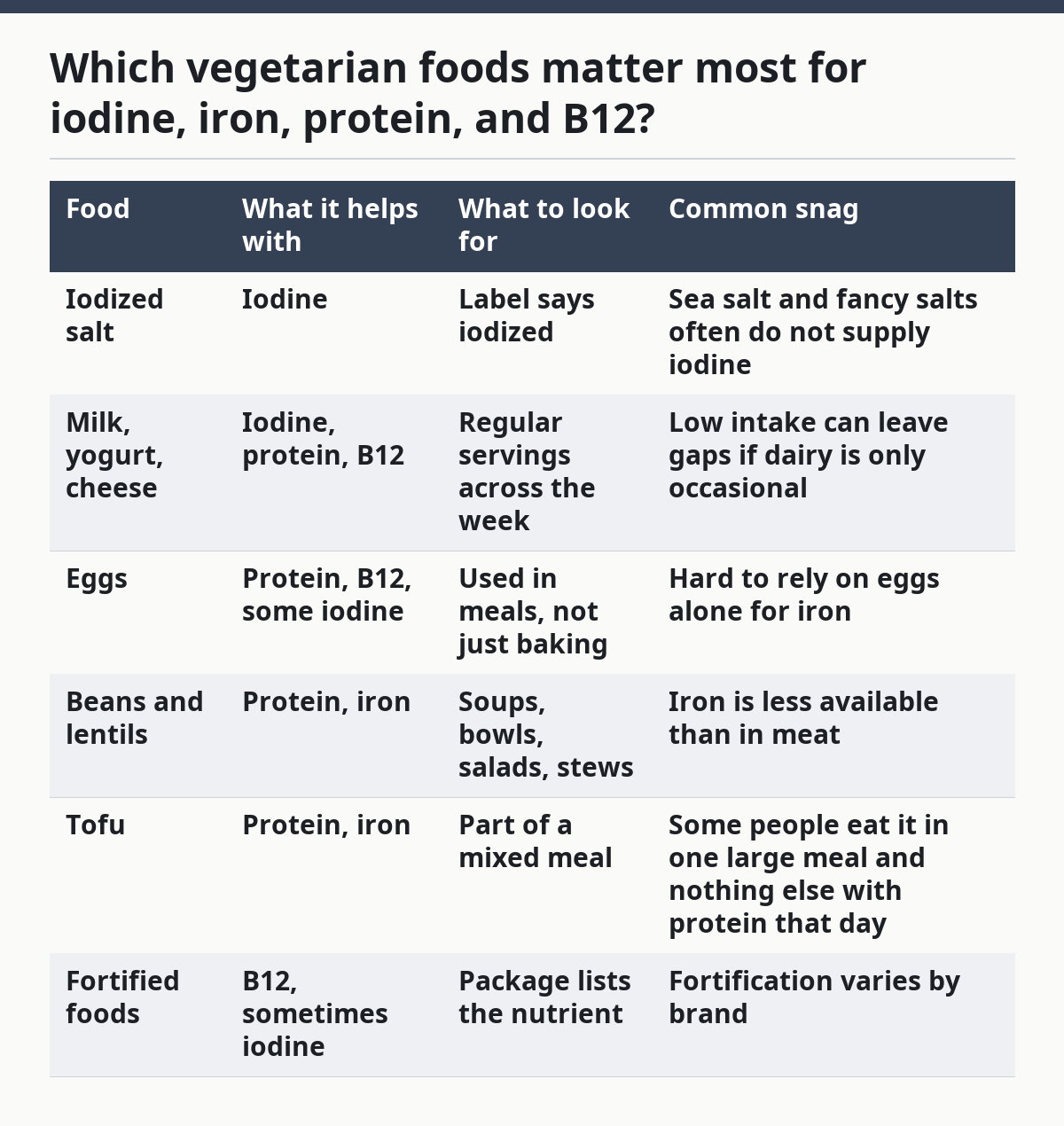
Which vegetarian foods matter most for iodine, iron, protein, and B12?
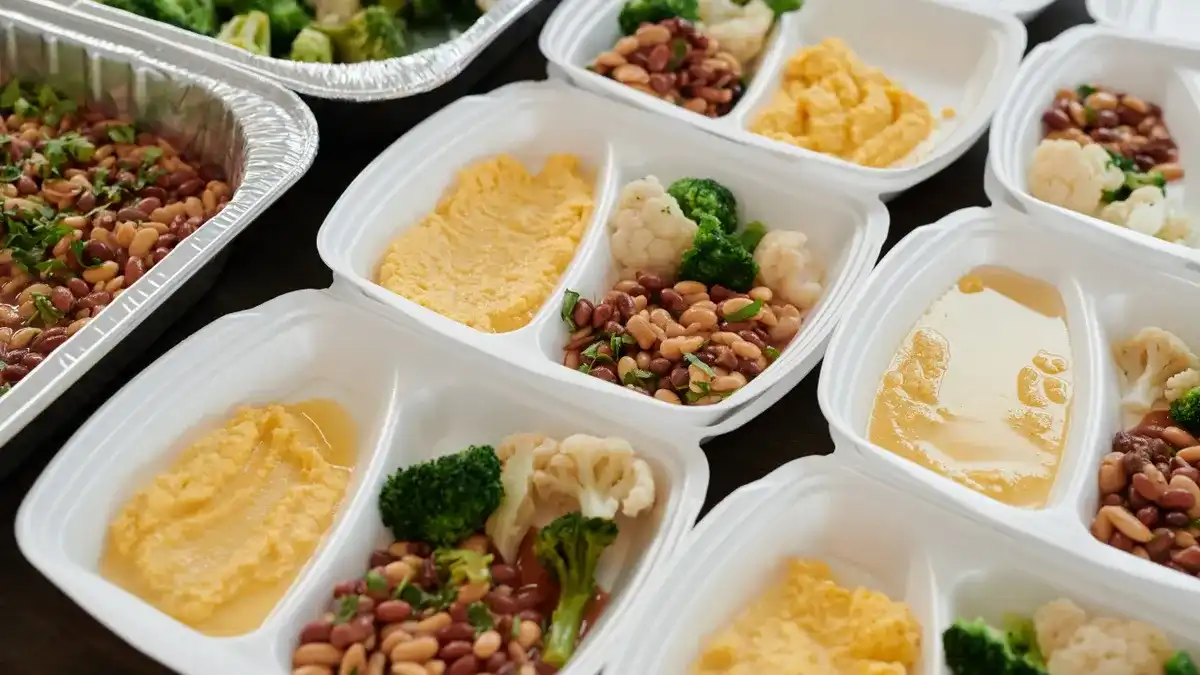
The most useful vegetarian foods for thyroid nutrition are iodized salt, dairy, eggs, beans, lentils, tofu, and fortified foods. Those are the items that usually do the heavy lifting when meat is off the menu.
The thyroid connection is easy to miss: iodine supports hormone production, iron helps the system run, protein keeps meals anchored, and B12 is easy to under-eat if you skip animal foods. A review in Nutrients notes that vegetarian diets can be adequate, but they require attention to B12, iron, iodine, zinc, and selenium.
Here’s a quick reference for the foods that matter most.
| Food | What it helps with | What to look for | Common snag |
|---|---|---|---|
| Iodized salt | Iodine | Label says iodized | Sea salt and fancy salts often do not supply iodine |
| Milk, yogurt, cheese | Iodine, protein, B12 | Regular servings across the week | Low intake can leave gaps if dairy is only occasional |
| Eggs | Protein, B12, some iodine | Used in meals, not just baking | Hard to rely on eggs alone for iron |
| Beans and lentils | Protein, iron | Soups, bowls, salads, stews | Iron is less available than in meat |
| Tofu | Protein, iron | Part of a mixed meal | Some people eat it in one large meal and nothing else with protein that day |
| Fortified foods | B12, sometimes iodine | Package lists the nutrient | Fortification varies by brand |
On the evidence side, the same PubMed sample showed a median publication year of 2020 and 5 of 14 records were reviews. That tells you the topic is active, but not settled enough for sweeping claims. It also means food labels and professional guidance matter more than social-media certainty.
What about tofu, soy, and beans?
Soy foods can fit into a vegetarian thyroid diet, but they should be handled with care around medicine timing and overall diet quality. Tofu, soy milk, edamame, beans, and lentils can all support protein intake, and a clinician can help if you are unsure about timing with thyroid medicine.
Picture this: you’ve heard mixed things about soy and now every tofu meal feels suspicious. The better move is to separate the food from the rumor — look at the full plate, the timing of your medicine, and whether your diet still has enough iodine and B12.
The practical point is simple: tofu and beans are useful because they give you protein, and protein is hard to replace if you eat vegetarian. They are not magic thyroid foods, and other foods still matter for iodine, iron, and B12.
- Tofu: useful in stir-fries, curries, and bowls.
- Beans and lentils: useful in soups, chili, wraps, and salads.
- Eggs and dairy: useful if you eat them, because they bring protein plus B12 help.
- Fortified foods: useful when they clearly list B12 or iodine.
If you take thyroid medicine, timing matters more than any single protein. Follow the specific directions given with your prescription, and ask a pharmacist if you are unsure how to fit breakfast, soy foods, calcium, or iron supplements around it.
Can a vegetarian get enough iron and B12 for thyroid health?
Yes — but only if you plan for them on purpose, because both nutrients can slip below target in vegetarian eating patterns. Iron is the one most people notice first, while B12 is the one that can go quiet for a long time before it shows up as a problem.
Because of that, the daily pattern matters more than a single high-iron meal. Beans, lentils, tofu, spinach, pumpkin seeds, and fortified cereals can all help, but they work better when you add vitamin C at the same meal and avoid stacking that meal with habits that make iron harder to use.
Try this pattern:
- Lentil soup with tomatoes
- Bean burrito with salsa
- Tofu and broccoli stir-fry with peppers
- Yogurt with fruit if you eat dairy
- Eggs with toast and tomatoes if you eat eggs
B12 needs a different check. If you eat eggs and dairy often, you may cover some of the gap. If you do not, fortified foods or a supplement conversation with a qualified professional becomes part of the plan, because food alone may not be enough.
When should a vegetarian with thyroid concerns get help?
Get qualified help if you have symptoms, take thyroid medicine, are pregnant, or think your vegetarian pattern is low in iodine, iron, or B12. Those are the situations where generic advice stops being enough.
You already have thyroid disease: Your food plan may need to fit medication, labs, and the type of thyroid condition you have — bring the details to a qualified clinician.
You are pregnant or trying to conceive: Iodine and iron needs often matter more here — ask for individualized advice before changing your pattern.
You have heavy periods, fatigue, or known anemia: Iron may need closer attention — do not assume beans alone will cover it.
You avoid dairy and eggs: Iodine and B12 can get tight fast — check fortified foods and talk through your options.
You rely on seaweed, kelp, or supplements for iodine: Amounts can vary a lot — get advice before making that your main source.
You are changing thyroid medicine timing: Food and supplements can interfere with absorption — verify the schedule with the prescriber or pharmacist.
This is the point where a meal plan becomes a care plan. If your pattern is stable, your labs are fine, and you eat a wide mix of vegetarian foods, the usual food-first approach is reasonable. If not, the margin for error shrinks.
What mistakes do people make with vegetarian thyroid eating?
The biggest mistakes are skipping iodine, missing iron, depending on one protein, and assuming B12 will take care of itself. Those errors are common because vegetarian food can look healthy while still being thin in the nutrients thyroid health leans on.
Picture this: you’re eating salads, grain bowls, fruit, and plant-based snacks all day, and it feels virtuous. The problem is that healthy-looking does not mean nutrient-complete.
- Using non-iodized salt only. The consequence is a weak iodine supply; the alternative is iodized salt if it fits your medical plan.
- Treating beans as enough by themselves. The consequence is protein without enough variety; the alternative is to pair beans with tofu, eggs, dairy, or fortified foods.
- Forgetting vitamin C with iron foods. The consequence is poorer iron use; the alternative is to add citrus, peppers, tomatoes, or berries.
- Assuming all plant milks are equal. The consequence is missing B12 and iodine; the alternative is to read the label, because fortification differs by brand.
- Ignoring breakfast. The consequence is that protein and iodine get pushed too late; the alternative is to put eggs, yogurt, tofu, or fortified food in the first meal.
- Changing thyroid medication routines casually.
Drafted with AI; not yet reviewed by a person.