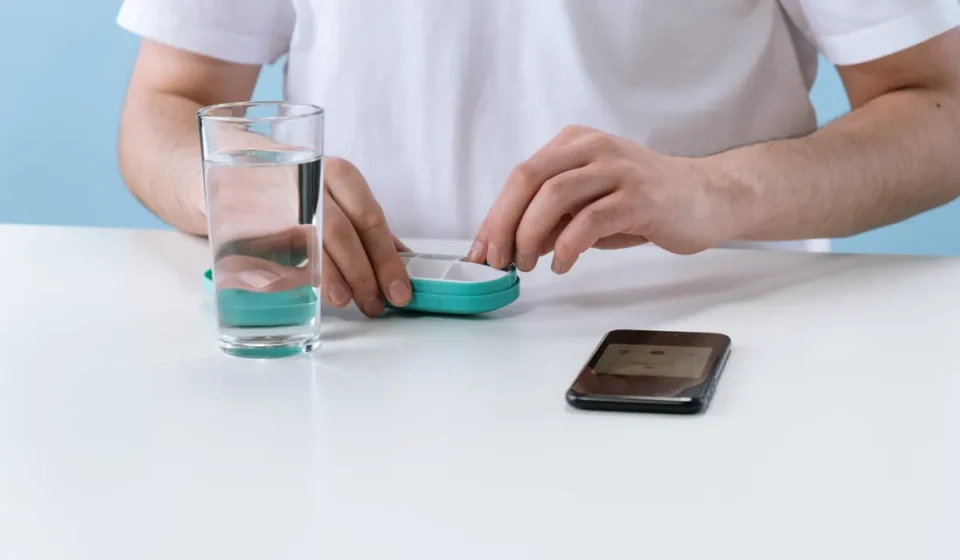
What to Do If You Accidentally Take Levothyroxine with Breakfast

Last updated: November 20, 2026
Key Takeaways
- Have a simple plan for the next hour; don’t debate thyroid science.
- Breakfast may reduce absorption, but it usually does not cancel levothyroxine.
- Build a routine that works even with coffee, noise, and a rushed morning.
You took your levothyroxine dose with breakfast and now you want the next step, not a lecture. Usually, you do not need to panic or take an extra pill. What to do if you accidentally take levothyroxine with breakfast is simple: return to your usual schedule, and check with a clinician or pharmacist if you are unsure. The guide below settles what to do today, what not to repeat, and when to call a clinician.
What to do right after you notice

Picture this: you’re already halfway through breakfast, you remember your pill, and your stomach drops for a second. You need a simple plan for the next hour, not a long debate about thyroid science.
Take a breath and do not take another levothyroxine dose unless a clinician has told you to. One mixed-up morning with food is usually a timing problem, not an emergency. The main issue is that breakfast can reduce absorption, so the dose may work less efficiently that day. Most people should just return to their usual routine the next morning.
Here’s the catch: do not “make up” the dose by swallowing another tablet later in the day. Levothyroxine is meant to be taken on a steady schedule, and doubling up can create a bigger problem than the breakfast mistake. If you’re unsure whether you already swallowed it, check the pill organizer, bottle cap, or phone reminder before you do anything else.
Use this quick response plan:
- Stop and confirm the dose. Check whether the tablet is already gone, still in the bottle, or sitting on the table. That can help prevent a second dose; if you are still unsure, ask a pharmacist or clinician.
- Do not eat around it on purpose. You do not need to skip the rest of breakfast to “fix” the mistake.
- Resume normal timing tomorrow. Take the next dose the same way you usually do, ideally under the same food-timing routine.
- Watch for a pattern. If breakfast timing keeps happening, move the dose to a time you can repeat every day.
If this was a one-off, that’s usually the end of it. If it keeps happening, the problem is no longer the breakfast itself — it’s the routine.
Does breakfast ruin levothyroxine?
No, breakfast does not cancel levothyroxine, but it can make the dose absorb less well. A single breakfast is more of a timing hiccup than a failure.
Levothyroxine is sensitive to food timing. Meal size matters too. A light snack and a full plate are not the same thing, and a big breakfast usually gives the medicine more company in the gut than an empty stomach does. That said, this page is about the immediate next step after the mistake, not the fine print of every breakfast ingredient.
The truth is, the body does not turn one mixed dose into zero benefit. The tablet may still work, just less predictably. That’s why the standard move after an accidental breakfast dose is usually to continue the regular schedule instead of trying to compensate on the spot.
A few things matter here:
- Food timing can slow or lower absorption.
- Same-day timing matters more than panic.
- Repeat mistakes matter more than one slip.
- Dose timing should stay consistent from one day to the next.
If breakfast was especially heavy, greasy, or high-fiber, the absorption hit may be a little larger. Even then, a one-time error is usually handled by getting back to your normal routine the next day. The FDA’s patient information for levothyroxine also advises taking it on an empty stomach, usually 30 to 60 minutes before breakfast, which is why timing matters. The page in this hub on thyroid medication timing and daily routines is the better place for the full food-spacing rules.
What not to do after the mistake

Picture this: you’re annoyed at yourself and tempted to “fix” the morning by taking more pills, skipping food, or shifting the dose randomly. That reaction is common, and it’s the wrong move.
Do not take a second levothyroxine dose the same day just because breakfast was in the way. Do not skip your next day’s dose unless a clinician has told you to do that. And do not turn one timing error into a new schedule without a reason.
Common mistakes and what they cost:
- Taking an extra tablet: can create an unnecessary high dose.
- Skipping the next dose: can leave you underdosed for longer than the breakfast mistake would have.
- Changing the time every day: makes it harder to know what is happening with absorption.
- Overcorrecting with supplements or food avoidance: adds confusion without fixing the original problem.
The better move is boring, and boring is good here. Stick to one plan. If you usually take levothyroxine in the morning, return to that same pattern tomorrow. If mornings keep getting crowded, talk with a clinician or pharmacist about a dose time that fits your day better.
One more thing: keep the pill bottle somewhere you can see it before breakfast. A countertop, nightstand, or bathroom shelf works better than a drawer you open after eating. A visible bottle beats a perfect intention.
Same-day timing: what to expect for the rest of today
Picture this: you’ve already taken the tablet with eggs or toast, and now you’re wondering whether the rest of the day needs to change. It usually doesn’t, as long as you avoid a second dose and keep the day steady.
After the mistake, the main goal is not to “rescue” the dose with another schedule. Levothyroxine works on a long time frame, not a minute-by-minute one, so one breakfast dose rarely calls for a dramatic same-day change. You can usually eat lunch and dinner normally.
That said, same-day timing still matters for other meds and supplements. Calcium, iron, antacids, and some multivitamins can also interfere with absorption if they’re taken too close to levothyroxine. If those are part of your morning, the breakfast slip may have come with extra interference. That is a reason to review the whole routine, not to stack more pills to correct it.
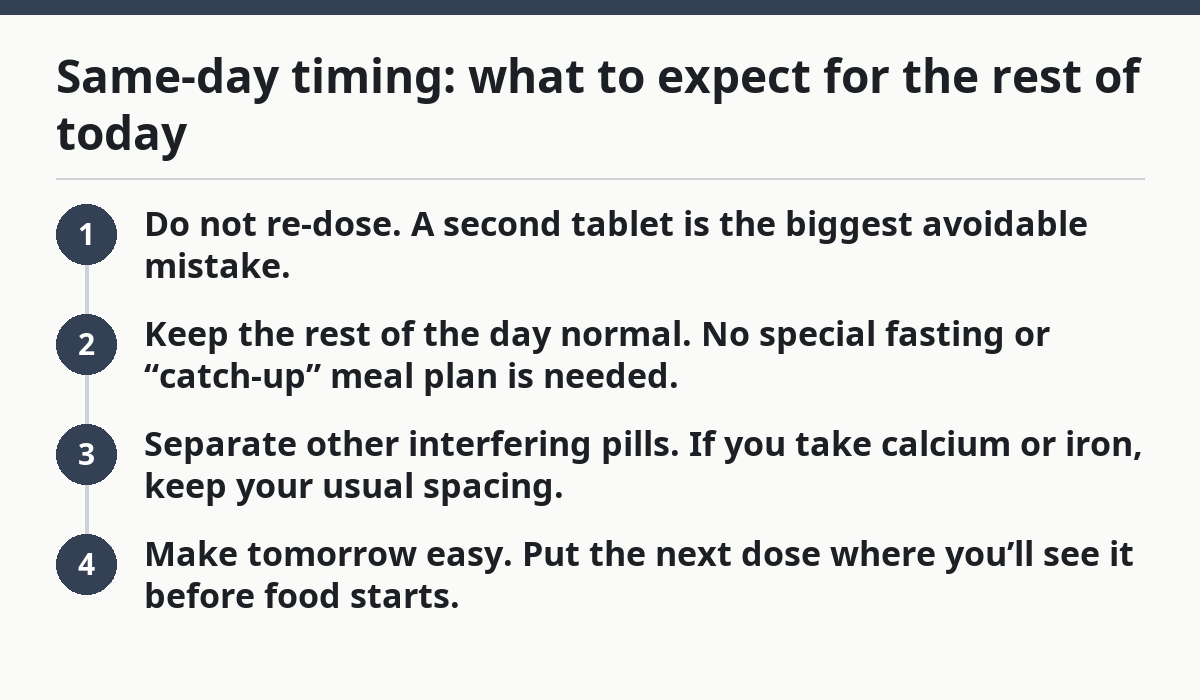
A simple same-day plan looks like this:
- Do not re-dose. A second tablet is the biggest avoidable mistake.
- Keep the rest of the day normal. No special fasting or “catch-up” meal plan is needed.
- Separate other interfering pills. If you take calcium or iron, keep your usual spacing.
- Make tomorrow easy. Put the next dose where you’ll see it before food starts.
If you notice you’ve been taking levothyroxine with breakfast more than once, the issue has shifted from “accident” to “routine.” That’s when it makes sense to ask for help with a schedule that you can actually repeat.
When should you call a clinician?
You should call a clinician if this was not a one-time mistake, if you may have taken more than one levothyroxine dose, or if you have symptoms that make you worry something is off. That’s the line that matters.
A single breakfast dose usually does not need urgent action. But there are times when the safer move is to check in. If you take levothyroxine for the first time and you’re still learning the routine, a pharmacist can also help you set a clean dose timing plan in a few minutes. The NHS and the FDA both note that levothyroxine timing can be adjusted only with professional advice, which is why a quick call is reasonable when the situation is unclear.
Call for advice if any of these apply:
- You think you took two doses.
- You keep taking it with food more than once a week.
- You recently changed brands or strengths.
- You have new symptoms and want help sorting out whether they’re related.
- You are pregnant, have heart disease, or have been told to monitor thyroid levels closely.
On the flip side, a one-off breakfast mistake without symptoms usually does not need an urgent call. In that case, the sensible move is to return to your usual schedule and mention it at your next routine visit if it becomes a pattern.
If you do call, be ready to name the dose strength, the time you took it, what you ate, and whether you take calcium, iron, antacids, or other morning pills. Those details matter more than guessing.
How to keep it from happening again
Picture this: tomorrow morning comes around and you want a plan that does not depend on perfect memory. You need a routine that survives coffee, noise, and a rushed breakfast.
The best prevention is to make levothyroxine the first thing you handle, or move it to a time you can repeat every day. A routine that works five days a week but fails on weekends is not a real routine. Simpler is better.
Use one of these setups:
- Before breakfast: keep the tablet by your water glass and take it as soon as you wake up.
- Later in the day: choose a time that stays away from meals and stays the same.
- Night routine: if mornings are chaotic, ask a clinician whether bedtime timing fits your schedule.
What helps most is consistency. The tablet should live in one place. The reminder should happen at one time. The breakfast should come after the dose, not before it by accident. That sounds basic, but a 30-second habit is easier to keep than a complicated rule.
A few practical tools can help:
- A phone alarm labeled “levothyroxine”
- A pillbox with a single morning slot
- A note on the coffee maker
- A bottle kept away from breakfast food
The best part? You do not need a perfect morning. You need the same morning most days. If that still feels hard, the problem is not willpower — it’s the setup. For more scheduling help, see the guide to thyroid medication timing and daily medication routines.
What a one-time breakfast mistake usually means
Picture this: you’re still worried that the pill “won’t work” because you took it with toast. That worry is understandable, but one breakfast does not usually undo your whole treatment.
A one-time mistake usually means minor absorption loss, not a failed day of therapy. What matters more is the pattern over time. If breakfast dosing keeps happening, your thyroid levels may drift because the medicine is not getting the same conditions each day. One slip is not the same as a habit.
That’s why the simple rule is so practical: do not overcorrect today, and do not repeat the mistake tomorrow. Keep the next dose on schedule, keep the rest of the day normal, and make the routine easier to follow. If you want more on daily timing habits, the hub on thyroid medication timing and daily routines covers the broader routine without turning this page into a second version of that guide.
Here’s the useful takeaway: the real risk is repetition, not one accident. That is the difference between a bad morning and a broken plan.
Do I need to retake levothyroxine after eating?
No, you usually do not need to retake levothyroxine after eating. One breakfast dose is generally handled by waiting until the next scheduled dose and getting back to your normal routine.
The problem with taking it again is that you can turn a food-timing issue into an extra-dose problem. If you are unsure whether the tablet actually went down, check first rather than guessing.
Should I skip my next dose if I took it with food?
No, you usually should not skip your next dose just because you took one with food. Skipping the next dose can create a bigger gap than the breakfast mistake.
The better move is usually to return to your usual schedule the next day. If you think you took too much, or if you keep making the same timing mistake, contact a clinician or pharmacist for personalized advice.
Drafted with AI; not yet reviewed by a person.