Last updated: November 21, 2026
Quick answer: yes — most people with hypothyroidism can eat soy, and a 4-hour gap from levothyroxine is the practical target. Can You Eat Soy with Hypothyroidism? Timing, Serving Size, and Common Mistakes: related questions matter because soy can interfere with thyroid medication absorption if it is taken too close to levothyroxine. The safest move is to keep soy and thyroid pills apart and keep servings moderate.
Key takeaways
- Soy does not need to be banned for every person with hypothyroidism.
- The bigger issue is spacing soy away from thyroid medicine, especially levothyroxine.
- Whole soy foods are a different choice from soy supplements, and supplements are the higher-risk option.
- A normal food serving is usually easier to fit into a thyroid-friendly meal plan than large daily amounts.
- If TSH has been drifting or symptoms have changed, the medication schedule is worth checking before blaming the soy.
Since people with thyroid disease still need protein, soy can be part of that. The part that causes trouble is usually timing, not a single tofu dinner. The American Thyroid Association advises that levothyroxine should be taken on an empty stomach and kept away from foods and supplements that can reduce absorption, including soy-based foods. If you are unsure how to apply that advice, consult your clinician or pharmacist and review the ATA patient information page on thyroid hormone treatment and the NIH Office of Dietary Supplements page on soy isoflavones for background: American Thyroid Association, NIH Office of Dietary Supplements.
What makes soy tricky with thyroid medicine?
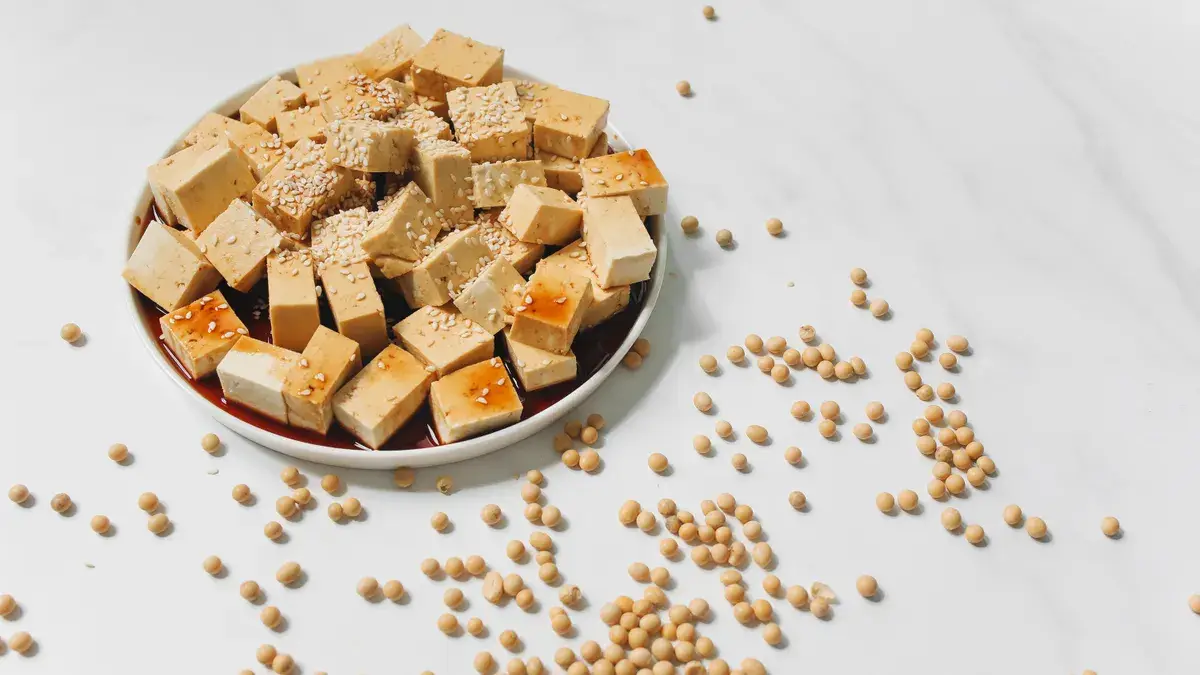
Soy is tricky because it can reduce levothyroxine absorption when it is taken too close to the pill. That does not mean soy damages the thyroid in most adults; it means the medication may not get into the body as well if timing is sloppy.
This is why a person can eat tofu at lunch and still do fine on thyroid medicine, then have a problem if they swallow the pill with soy milk at breakfast. The thyroid gland and the pill are not the same issue. One is the disease, the other is drug absorption.
The common mistake is treating soy like a poison instead of a timing issue, and a clinician or pharmacist can help if you are unsure how strict your schedule needs to be. A second mistake is assuming every thyroid symptom means soy is the cause. Fatigue, dry skin, constipation, weight change, and brain fog can come from many places, so a changed dose, missed dose, iron, calcium, or another medicine may be the real reason a lab value shifts. For a medication-based explanation, the ATA and NIH pages above are the safest starting points.
How much soy is reasonable?
A moderate food serving is usually the safer choice for most adults, and the bigger concern is large, repeated intakes or concentrated soy supplements. Soy food is not the same thing as a capsule or powder, because supplements can deliver a much higher dose of soy isoflavones than a normal meal.
A practical serving is the kind that fits into an ordinary plate: tofu, tempeh, edamame, soy milk, or soy yogurt in food-sized portions. The NIH notes that the safety data for soy isoflavone supplements are less reassuring than the data for soy foods, which is one reason whole-food soy is the better default.
| Criteria | Soy foods | Soy supplements | Winner for this condition |
|---|---|---|---|
| Absorption risk with levothyroxine | Lower when spaced from medication | Higher because the dose is concentrated | Soy foods |
| Ease of fitting into a normal meal | Simple | Less natural | Soy foods |
| Risk of overdoing isoflavones | Lower | Higher | Soy foods |
| Usefulness for protein | Good | Poor | Soy foods |
| Convenience | Moderate | High | Soy supplements |
| Best for someone on thyroid medicine | Usually yes | Usually no unless a clinician says so | Soy foods |
| Best for someone with lab instability | Better fit | Poor fit | Soy foods |
| Need for extra caution | Timing matters | Timing and dose both matter | Soy supplements |
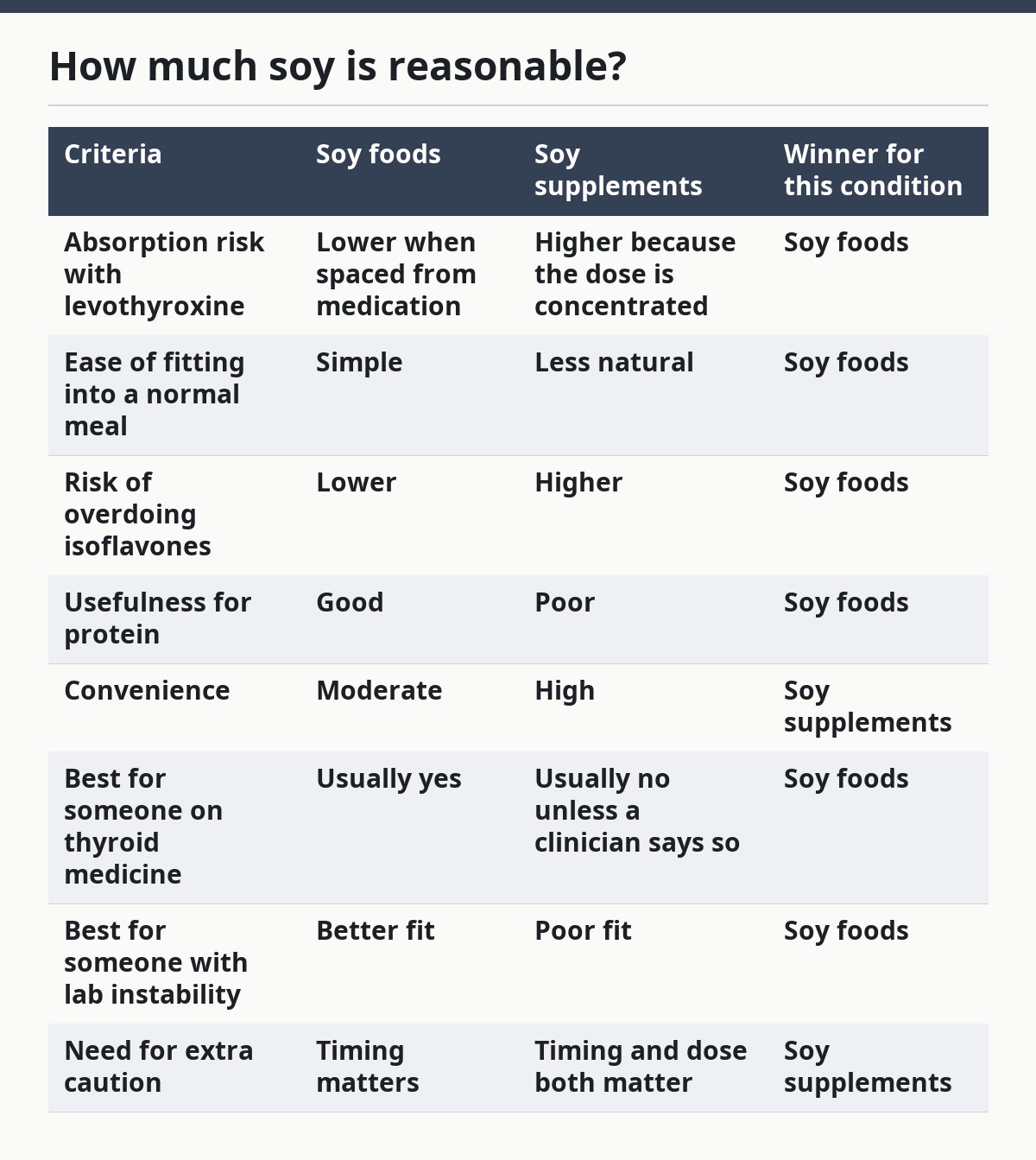
Because soy foods win for most readers with hypothyroidism, they are easier to keep moderate and easier to separate from medication. Soy supplements lose because they concentrate what a food would spread out across a meal. That makes them the choice I would skip unless a clinician has a specific reason to use them.
When should soy and levothyroxine be separated?
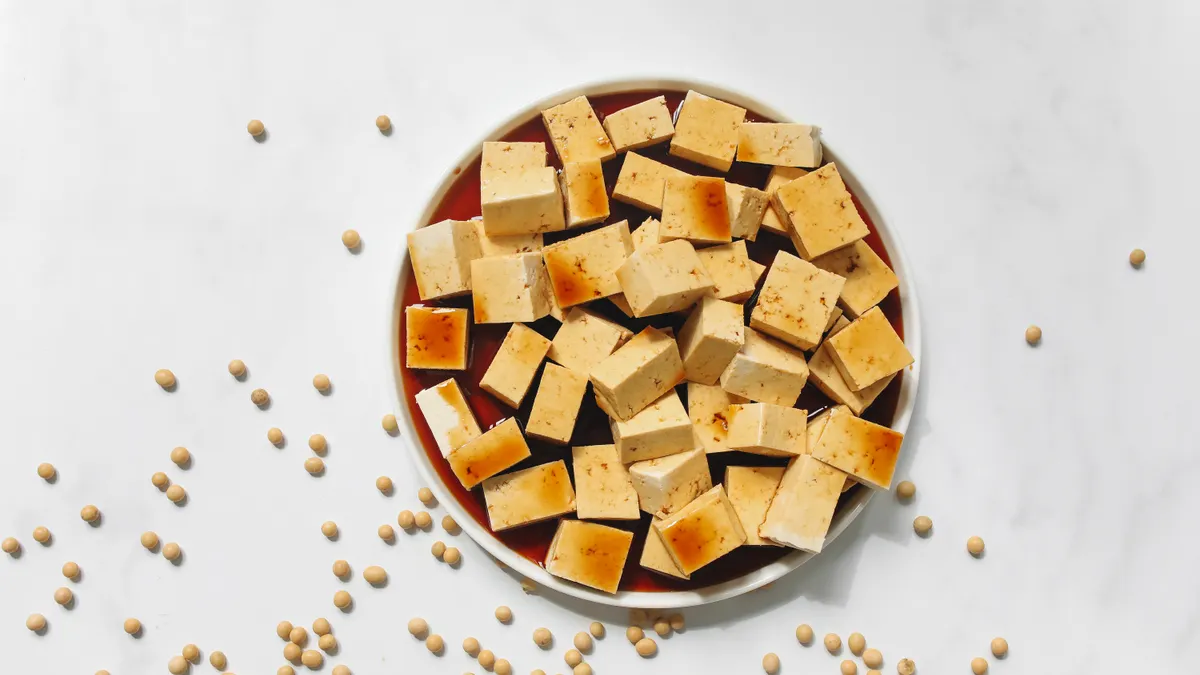
Soy and levothyroxine should be separated by several hours, and many thyroid guidance pages use a 4-hour buffer for foods and supplements that can interfere with absorption. That buffer matters most if soy is part of breakfast and the pill is taken at the same time.
The cleanest setup is simple: take levothyroxine by itself, then wait before eating soy-heavy food. If breakfast is usually soy milk, soy yogurt, or tofu scramble, move the medication to a different time or move the soy to another meal. The point is consistency, because TSH interpretation becomes messy when the routine keeps changing.
This is also where people slip up with habit, not knowledge. A person may know to avoid calcium at the same moment as levothyroxine and still forget that a protein shake with soy can create a similar problem. If TSH changes after a schedule change, the first thing to check is whether the pill and the soy got closer together.
What are the common mistakes?
The most common mistake is taking thyroid medicine with a soy breakfast. That is the easiest way to create absorption problems, and it is especially common when the meal is fast and the pill is taken on autopilot.
A second mistake is replacing all breakfast protein with soy and then thinking the food itself is the problem. The issue is not that the meal contains protein; it is that soy can interfere with medication timing. Oats, eggs, dairy, beans, meat, and nuts create a different pattern than a soy-heavy shake or bowl.
A third mistake is treating soy supplements like food, and if you are considering one, ask a clinician or pharmacist before starting it. Capsules, powders, and concentrated isoflavone products do not behave like a serving of tofu or edamame, and they deserve more caution. A fourth mistake is changing soy intake every few days, then wondering why a lab result keeps moving. Thyroid care likes routine, and the lab is easier to read when the diet is steady.
Should you avoid soy completely?
No, you usually do not need to avoid soy completely if you have hypothyroidism. That answer changes if your thyroid levels stay unstable, your medication schedule is inconsistent, or you are using a high-dose soy supplement.
This is where the decision becomes personal in a practical way. Soy foods can stay on the menu if the pill is taken cleanly and the servings are steady. If you are trying to figure out why a dose seems off after a month of shaky TSH values, then a soy-heavy routine is worth reviewing with the rest of the diet, especially calcium, iron, and coffee timing.
People who should be more cautious include anyone who takes levothyroxine and cannot keep a reliable morning routine, anyone who uses soy protein powders, and anyone whose clinician has already said absorption is a problem. People who are usually fine with soy include adults who eat moderate portions, keep the pill separated, and have stable labs.
What should a thyroid-friendly soy meal look like?
A thyroid-friendly soy meal is one that keeps soy in food form and keeps it away from the pill window. Think tofu with rice and vegetables at lunch, edamame as a snack later in the day, or soy milk at dinner if the morning dose is long past.
The easiest pattern is consistency across the week. If Monday has soy yogurt at breakfast and Tuesday has a coffee-and-pill routine, the mix makes it harder to know what changed if symptoms flare or labs move. A steady plan helps the clinician interpret a 6- to 8-week lab recheck more clearly.
For meal prep, that means soy can be useful, but it should not be the anchor of every first meal after medication. If you like soy, keep it in the rotation and protect the medication window. If you do not like rules around breakfast, the simpler answer is to use another protein and save soy for later.
When do the rules flip?
The rules flip when soy is no longer a normal food choice and starts acting like a concentrated exposure. That happens with supplements, with very large daily intakes, or with a thyroid regimen that is already hard to stabilize.
Another flip point is pregnancy, because thyroid management gets tighter and the margin for error shrinks. A third is if your clinician is adjusting levothyroxine and asking for a clean, repeatable routine before the next blood test. In those cases, even a harmless-looking soy habit can muddy the picture.
If soy is making you anxious enough to micromanage every plate, that is also a sign to simplify. A thyroid plan that is easy to repeat for 30 days is better than a perfect plan that lasts 3 days. The right food pattern is the one you can keep without guessing.
FAQ
Is tofu bad for hypothyroidism?
No, tofu is not automatically bad for hypothyroidism. The main issue is whether it is eaten too close to levothyroxine, because that can affect absorption. If tofu shows up at a meal that is several hours away from the pill, it is usually much easier to fit in.
Can I drink soy milk if I take levothyroxine?
Yes, but not at the same time as levothyroxine. Soy milk is best kept away from the medication window, because soy can interfere with absorption. If soy milk is part of breakfast, move the pill to another routine that keeps the timing consistent.
Are soy supplements safe with hypothyroidism?
Soy supplements are the choice to be most careful with. They concentrate isoflavones in a way that food does not, and the NIH notes that supplement data are less reassuring than whole-food soy data. If you want to use one, ask a clinician first, especially if your TSH has been unstable.
How long should I wait after taking thyroid medicine before eating soy?
A 4-hour gap is the common practical target used for many foods and supplements that interfere with levothyroxine absorption. That gives the medicine time to move through the stomach before soy enters the picture. If your clinician gave you a different schedule, follow that plan.
What if my thyroid labs changed after I started eating more soy?
Do not assume soy is the only cause, but do check the timing first. A recent change in soy intake, plus missed doses, calcium, iron, or coffee timing, can all affect lab results. The best next step is to bring the full routine to your clinician and review it before changing the dose on your own.
Drafted with AI; not yet reviewed by a person.