Thyroid Nutrition for Supplements and Nutrient Gaps

Last updated: November 20, 2026
Quick Answer: The best starting point is usually one targeted supplement, not a broad thyroid blend, because it is easier to match to labs and easier to stop if it causes problems. This guide on Thyroid nutrition for supplements and nutrient gaps — The Complete Guide sorts out which nutrients matter most, which supplements can backfire, and how to think about gaps without guessing. It also shows what a thyroid-friendly supplement plan should answer before you buy. The safest move is to review your labs and supplement list with a qualified clinician before starting anything new.
Key takeaways
- Thyroid support is not one supplement. It starts with the nutrient gap, the medication timing, and the lab pattern.
- Iodine, selenium, iron, zinc, and vitamin D are the names that come up most often, but more is not better.
- Some supplements can interfere with thyroid medicine, especially when they contain minerals like calcium or iron.
- A product that looks “thyroid-focused” can still be a bad fit if it combines too many ingredients or uses high-dose iodine.
- The right question is not “what helps the thyroid?” It is “what gap exists, what does the lab show, and what conflicts with treatment?” A clinician can help answer that safely, and the NIH Office of Dietary Supplements is a reliable place to check nutrient basics.
What are the nutrient gaps that matter most for thyroid health?

The short answer is iodine, selenium, iron, zinc, and vitamin D, but the real issue is whether you have a documented gap or a reason to suspect one. Thyroid tissue depends on several nutrients, yet the research and clinical guidance do not support blanket supplement use for everyone.
Picture this: you’re staring at a bottle that promises thyroid support, but your last lab panel only showed one abnormal marker and you do not know which nutrient, if any, is involved. That’s the common trap. The right supplement depends on the gap, not the label.
Iodine gets the most attention because the thyroid uses it to make hormone, but both too little and too much can be a problem. Selenium shows up in thyroid hormone metabolism and antioxidant defenses, while iron matters because low iron can affect thyroid function and symptoms like fatigue. Zinc and vitamin D come up often in nutrient panels and in studies looking at thyroid conditions, though the evidence is mixed and varies by person.
Here’s the catch:
- Not every person with thyroid disease has a nutrient deficiency.
- Not every low lab value explains the thyroid picture.
- Not every supplement helps even when a level is low.
For that reason, clinicians often look at:
- TSH, free T4, and sometimes free T3
- Thyroid antibodies when autoimmune disease is suspected
- Ferritin or iron studies
- Vitamin D
- B12, folate, and sometimes magnesium, depending on the case
Two authoritative places to start are the National Institutes of Health Office of Dietary Supplements fact sheets and the American Thyroid Association patient guidance. They do not replace personal care, but they do set a sane ceiling on what counts as reasonable. The Mayo Clinic also has patient-facing guidance on thyroid medication timing and supplement interactions.
Which thyroid nutrients are most often worth checking first?
The first nutrients to check are usually the ones with clear thyroid links and clear downside if you guess wrong: iodine, selenium, iron, and vitamin D. That order can change based on diet, symptoms, pregnancy status, medications, and the kind of thyroid disorder you have.
Picture this: you have been told your thyroid is “off,” but your supplement cabinet already has a multivitamin, an algae capsule, and a hair-and-nails blend. That pile can hide the actual gap. The first job is to separate a true deficiency from a stack of overlapping products.
Iodine
Iodine is necessary for thyroid hormone production, but extra iodine is not a harmless boost. People who already get enough from food, iodized salt, dairy, seafood, or prenatal vitamins may not need more, and some thyroid conditions can worsen with excess iodine. Seaweed supplements are the classic example because iodine content can vary widely from one product to the next.
Selenium
Selenium is part of enzymes involved in thyroid hormone handling and antioxidant defense. Research has explored selenium in autoimmune thyroid disease, but the findings are not simple enough to turn into a universal rule. The practical issue is that selenium has a narrow comfort zone; more is not better.
Iron
Iron deficiency is common enough that it deserves real attention, especially if fatigue, hair shedding, shortness of breath, or heavy periods are part of the picture. Low ferritin can coexist with thyroid symptoms, so a normal thyroid lab does not always explain how someone feels.
Zinc and vitamin D
Zinc matters for many body systems, including hormone-related pathways, and low zinc can overlap with poor appetite or restricted diets. Vitamin D is often checked because low levels are common in many populations and because it often appears in thyroid-related research, especially autoimmune discussions. The evidence does not support treating thyroid disease with vitamin D alone, though, and that is a point to review with a clinician.
A simple rule helps:
- If a nutrient is low on labs, that is the strongest reason to discuss supplementation.
- If it is only “popular for thyroid,” the case is weaker.
- If the supplement includes large doses without a measured gap, the risk goes up.
What supplements can interfere with thyroid medicine?
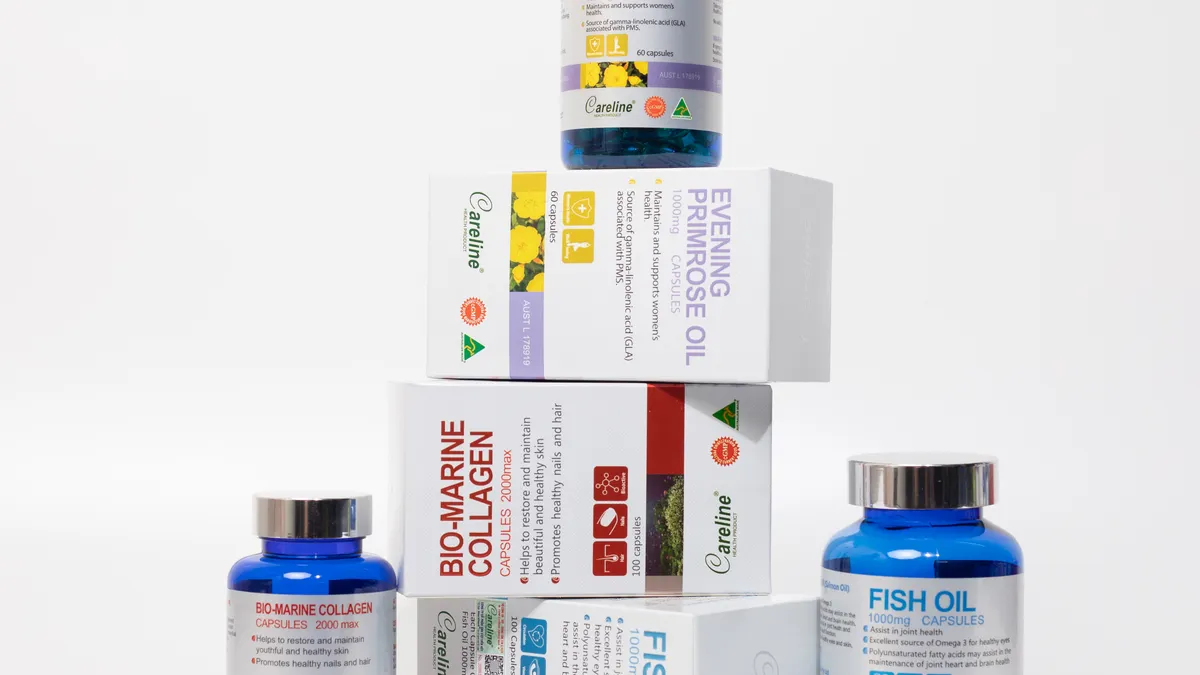
The main problem is timing, not just ingredients: calcium, iron, magnesium, and some fiber products can reduce absorption of thyroid medication if taken too close together. That interaction is well recognized in prescribing guidance and patient instructions, and it can matter even when the supplement itself is otherwise fine. The American Thyroid Association and the FDA both note this issue, and the Mayo Clinic gives similar advice.
Picture this: you take your thyroid pill in the morning, then follow it with a multivitamin, a magnesium capsule, and a coffee with milk. The medicine may never get a clean chance to absorb the way it should. Spacing matters more than branding.
Common troublemakers include:
- Calcium: often found in bone formulas, some antacids, and many multivitamins
- Iron: found in prenatal vitamins and many “energy” blends
- Magnesium: common in sleep formulas and mineral packs
- Fiber supplements: can slow or reduce absorption in some people
- Soy-heavy products: may matter for some medication routines
- Biotin: can distort certain thyroid lab tests, which creates false alarm or false reassurance
This is where generic thyroid supplement advice falls apart. A capsule can contain a mineral that seems helpful on paper and still create a timing problem in real life. If you are on thyroid replacement, the label is not enough; the schedule matters too.
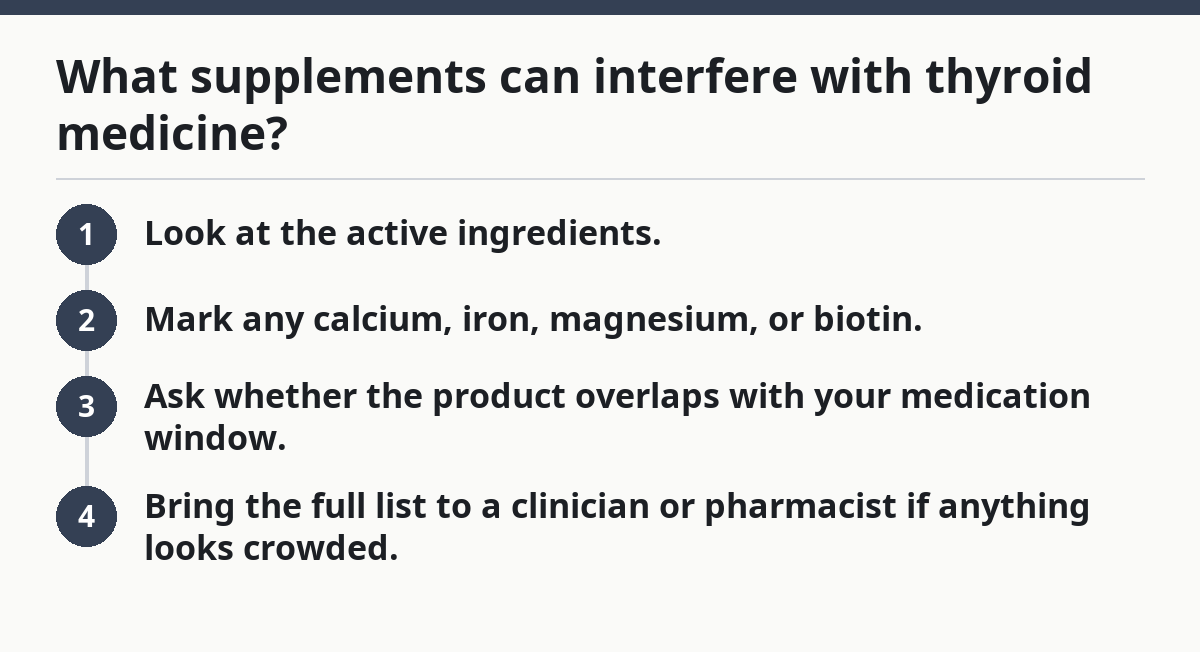
One simple check:
- Look at the active ingredients.
- Mark any calcium, iron, magnesium, or biotin.
- Ask whether the product overlaps with your medication window.
- Bring the full list to a clinician or pharmacist if anything looks crowded.
The Food and Drug Administration and the American Thyroid Association both have guidance worth reading if you need the plain version of these interactions. A pharmacist can also spot timing conflicts fast.
What should a thyroid supplement actually contain?
A good thyroid supplement usually contains a narrow set of nutrients, not a kitchen sink. The more ingredients it piles in, the harder it is to tell what is helping, what is redundant, and what might interfere with treatment. A clinician can help sort that out before you buy.
Picture this: you’re comparing two bottles online. One has five ingredients with clear amounts. The other has twenty compounds, proprietary blends, and a heroic claim about “thyroid balance.” The simpler label is usually easier to trust.
A sensible product, if one is being considered at all, tends to share these traits:
- It lists exact nutrient amounts, not just a blend name.
- It avoids huge iodine doses unless a clinician has a clear reason.
- It does not hide mineral doses inside a proprietary mix.
- It does not stack multiple forms of the same nutrient in a way that makes totals hard to see.
- It fits your medication schedule without creating a conflict.
The flip side matters too. A thyroid supplement can be a poor choice if it includes:
- high iodine from kelp or seaweed without clear justification
- iron when iron status is already normal
- calcium or magnesium at a time that clashes with thyroid medicine
- biotin in a dose that could distort lab work
- stimulant herbs that may not belong in a thyroid plan at all
If your goal is to correct a lab gap, the better question is not “which thyroid formula is best?” It is “which single nutrient, at what amount, in what timing pattern, fits the lab pattern I actually have?” That is a much better filter.
How do I choose between single-nutrient supplements and thyroid blends?
Single-nutrient supplements win for clarity, and thyroid blends win only when you need a broad but carefully managed formula. In most cases, single-nutrient products are easier to match to a lab result and easier to stop if they cause a problem. A clinician or pharmacist can help check that choice against your medication list.
Picture this: you have one confirmed low ferritin result and a long list of other “maybe” symptoms. A multient ingredient blend makes the picture fuzzier, not clearer. Clarity beats convenience here.
Single-nutrient supplements
These make sense when a clinician has identified a specific gap. They are easier to adjust, easier to monitor, and easier to avoid overdoing. If iron is low, for example, a product focused on iron is easier to reason about than a thyroid blend that also adds iodine, selenium, zinc, and herbs.
Strengths
- Easier to match to labs
- Less risk of duplicate intake
- Easier to stop if side effects show up
- Simpler to compare against diet and multivitamins
Weaknesses
- Can feel incomplete if multiple gaps exist
- May require more than one product
- Can still interfere with medication timing if they contain minerals
Who should skip this: someone who has several confirmed gaps and cannot keep track of separate products may do better with a carefully reviewed combined plan from a clinician, not a self-built stack.
Thyroid blends
These may appeal to people who want one bottle and are trying to cover several nutrients at once. That can sound efficient, but the trade-off is less control over dose, more label clutter, and more chances for excess iodine or unwanted overlap.
Strengths
- Convenient
- Can cover several nutrients in one routine
- Sometimes useful when dietary intake is clearly low across several categories
Weaknesses
- Harder to personalize
- Higher risk of hidden duplication
- More likely to include ingredients that conflict with medication or labs
- Harder to know which ingredient is doing what
Who should skip this: someone on thyroid replacement who already takes a multivitamin or prenatal vitamin often does better with a single-nutrient plan, because overlap is a real risk.
Here’s the practical rule: if you can name the exact gap, go narrow. If you cannot name the gap, do not let a broad blend pretend to answer the question.
What the evidence says about popular thyroid supplements
The evidence for popular thyroid supplements is uneven, and that matters more than the marketing. Some nutrients have a real biochemical role, while others are mainly supported by small studies, association data, or indirect logic rather than clear clinical benefit.
Picture this: the supplement aisle offers selenium, iodine, ashwagandha, tyrosine, zinc, and more, all grouped under “thyroid support.” That category hides a big truth. Some ingredients are nutrient repair; others are just hope in a capsule.
Selenium is one of the most discussed ingredients because thyroid tissue uses selenium-dependent enzymes. Studies suggest it may have a role in selected autoimmune thyroid settings, but the results are not strong enough to treat it like a universal fix. The condition, the baseline selenium status, and the outcome being measured all matter.
Iodine is similar in that it is essential but easy to overshoot. A supplement can help only if intake is too low or if a clinician has identified a specific reason to address intake. Once you are already adequate, more iodine is not a free win.
Zinc, iron, and vitamin D are often discussed because low levels can overlap with fatigue, hair loss, and immune issues. That overlap is exactly why these nutrients get attention, but it also means symptoms alone cannot identify the problem. Hair shedding, cold intolerance, and tiredness are not a nutrient test.
Herbal products are the least predictable. Ashwagandha and other herbs are marketed for energy, stress, or thyroid support, but the evidence base is thinner and product quality varies. If a label promises a hormone-like effect without a lab-backed reason, that is a warning sign, not a bonus.
For reliable background, the National Center for Complementary and Integrative Health and the American Thyroid Association are stronger starting points than influencer reviews. They do not turn supplements into cures, and that restraint is the point.
When should a thyroid supplement plan be reconsidered entirely?
A thyroid supplement plan should be reconsidered when symptoms do not fit the labs, when the supplement list is getting longer, or when the main issue may not be nutrition at all. In those cases, more capsules are often the wrong move.
Picture this: you’ve been adding one product after another for months, but the fatigue, hair loss, or brain fog still hasn’t changed much. That is the moment to pause. More pills are not the same as better care.
Reconsider the plan if:
- You have not checked whether the thyroid medicine, if you take one, is being absorbed well.
- You are using several products that all contain minerals.
- A supplement has biotin, kelp, or a large “thyroid blend” with no clear reason.
- Your symptoms look more like anemia, sleep loss, depression, perimenopause, or another issue that can mimic thyroid trouble.
- The plan is based on symptoms alone without recent labs.
This is also the point where a professional review helps most. A clinician can look at the thyroid panel, medication timing, menstrual history, diet pattern, and other labs in one pass. That is the clean way to sort out whether the gap is real and which nutrient, if any, belongs in the plan.
A useful mindset shift:
- Supplements are for fixing a documented or strongly suspected gap.
- They are not a substitute for diagnosis.
- They are not a shortcut around a medication problem.
- They are not automatically safer because they are sold as “natural.”
That last point matters. Natural products can still be too strong, too weak, or simply wrong for the situation.
Which choice makes sense for most people?
For most people, a single-nutrient supplement matched to a real gap is the better choice than a broad thyroid blend. That is the cleaner option because it is easier to justify, easier to monitor, and less likely to create overlap with medication or other supplements.
Picture this: you want a plan that helps without turning into a second job. The best route is usually the one with the fewest moving parts. Target the gap, not the label.
Choose a narrow, nutrient-specific approach if you have:
- a lab-confirmed deficiency
- a clear reason to suspect one nutrient
- thyroid medication that must stay clean and predictable
- a supplement routine that already includes a multivitamin or prenatal
Choose a broader blend only if:
- several nutrients are low or borderline
- the product label is easy to audit
- the formula does not create timing conflicts
- a clinician has reviewed the full stack
Neither route makes sense if you are guessing, if the supplement list keeps growing, or if the product promises thyroid results without saying what problem it is solving. That is where people spend money and still miss the real issue.
What should I ask before I buy anything?
The best questions are the unglamorous ones: what is low, what conflicts, and what am I already taking? Those three checks prevent most bad supplement choices.
Picture this: you are about to click “add to cart” on a thyroid formula. The label looks polished, but the useful part is hidden in the details. Ask these questions first.
- Does this contain iodine, selenium, iron, calcium, magnesium, or biotin?
- Do I already get those from a multivitamin, prenatal, or food pattern?
- Will it interfere with thyroid medication timing?
- Is there a lab result that justifies this ingredient?
- Can I tell exactly why I am taking it?
If you cannot answer those questions, the product is premature. That is not a failure; it is a signal to slow down and get the picture clearer.
FAQ
Should I take iodine if I have thyroid symptoms?
Not automatically. Iodine is necessary for thyroid hormone production, but extra iodine can be a problem for some people, especially if intake is already adequate. A clinician can help judge whether your diet, medication, and labs point toward a real need.
Can selenium help with autoimmune thyroid disease?
Studies suggest selenium may have a role in some autoimmune thyroid settings, but the evidence is not uniform and it is not a blanket fix. The person, the baseline status, and the exact outcome being measured all matter. That is why selenium should be discussed in context, not added by default.
Do thyroid supplements replace medication?
No. Supplements do not replace prescribed thyroid treatment, and they should not be treated as a stand-in for diagnosis or follow-up. If medication is part of your care, supplement timing and ingredient overlap still matter.
Why do some supplements make my thyroid labs look weird?
Biotin is a common reason because it can interfere with certain lab assays and create misleading results. The problem is not only the thyroid itself; it is the test reading. Tell the lab and the clinician about every supplement you take.
What is the safest first step if I think I have a nutrient gap?
The safest first step is to review your symptoms, labs, food pattern, and current supplements with a qualified professional. That helps sort out whether the issue is a true deficiency, a medication timing problem, or something else that looks like thyroid trouble.
Drafted with AI; not yet reviewed by a person.