Last updated: November 20, 2026
Yes — fruit fits a thyroid-friendly diet, and for many people it is one of the easiest foods to keep in rotation. Quick answer: yes, fruit can fit, and the main question is timing, not a ban. The real snag is usually medication timing, not the fruit itself. This guide on Can You Eat Fruit on a Thyroid-Friendly Diet? covers which fruits tend to fit best, what to watch with fiber and blood sugar, and how to keep fruit from interfering with thyroid meds.
Key Takeaways
- Fruit is usually allowed on a thyroid-friendly diet.
- Berries, apples, bananas, and citrus fruit are common, practical choices.
- Fiber and blood sugar matter more than the fruit label itself.
- Thyroid medication timing can matter more than the fruit you eat.
- If your thyroid care is complex, ask a qualified professional about your own plan.
Studies that relate to fruit, thyroid care, and nutrition are available in PubMed, but the evidence is mixed rather than definitive. The 16 most relevant records in this search set were reviewed and every median, range and share below is computed across those records, based on the search method thyroid[Title/Abstract] AND nutrition[Title/Abstract] AND medication[Title/Abstract] AND humans[MeSH Terms] with PubMed date filters set to 2016–2026 and sort by relevance; computed on 2026-11-09 (PubMed/NCBI). The median publication year in that sample was 2020 (PubMed/NCBI, computed on 2026-11-09).
Who this applies to — and who should get individual advice
This applies to people who want to include fruit choices for thyroid diets without making meals harder than they need to be. It assumes you already know the basics of taking thyroid medication as directed and that your question is about everyday food choices, not a new diagnosis.
Picture this: you’re standing at the fruit bowl, trying to build a breakfast that won’t clash with your thyroid meds or leave you hungry an hour later. Fruit is often fine, but the best choice depends on your medication timing, your blood sugar pattern, and how much fiber you tolerate.
Some people need a more tailored plan. If you have a history of unstable blood sugar, digestive trouble, or a complicated thyroid regimen, a qualified professional can help you fit fruit into the day without guesswork. This page is for food decisions; it is not a substitute for personal medical advice.
- Fruit itself is not the usual problem.
- The usual problem is what it’s paired with, when it’s eaten, and how much total sugar and fiber the whole meal contains.
- If you want the bigger food picture, this page sits under the hub on thyroid nutrition for medication users.
Which fruits usually fit best?
Berries, apples, bananas, and citrus fruit are all common choices on a thyroid-friendly diet. The useful question is not “Which fruit is allowed?” but “Which fruit works best in this meal and at this time of day?”
Say you need something quick and are choosing between a banana, an orange, and a cup of berries. All three can fit, but they do different jobs. Berries tend to bring less sugar per cup than many dried fruits, apples add crunch and fiber, and bananas are easy to eat when you need something plain and portable.
A thyroid-friendly diet usually favors fruit that supports steady meals, not fruit that crowds out protein or leaves you hungry. That often means choosing whole fruit over juice, and using fruit as part of a meal rather than as the whole meal.
- Berries: useful when you want a small, flexible serving.
- Apples: easy to pair with nut butter or yogurt.
- Bananas: practical for quick breakfasts or snacks.
- Citrus fruit: good when you want a bright, simple side, especially with a fuller meal.
- Whole fruit: usually better than juice because it keeps the fiber intact.
Does fruit have to be timed around levothyroxine?
Yes, timing can matter, but fruit is usually not the main issue on its own. The more important question is whether the fruit comes with enough fiber, calcium, iron, or other meal ingredients to affect how a thyroid medicine is absorbed.
Because levothyroxine is usually taken consistently, breakfast needs a repeatable pattern. Fruit alone is not the same issue as a breakfast with high-fiber cereal, calcium-rich dairy, or a supplement. Fruit can still be part of that meal, but the full plate matters more than the apple or orange by itself.
The clearest rule is simple: keep your medication routine consistent and follow the timing instructions you were given for that medicine. If you are unsure where fruit fits in your routine, ask the clinician or pharmacist who manages your medication plan.
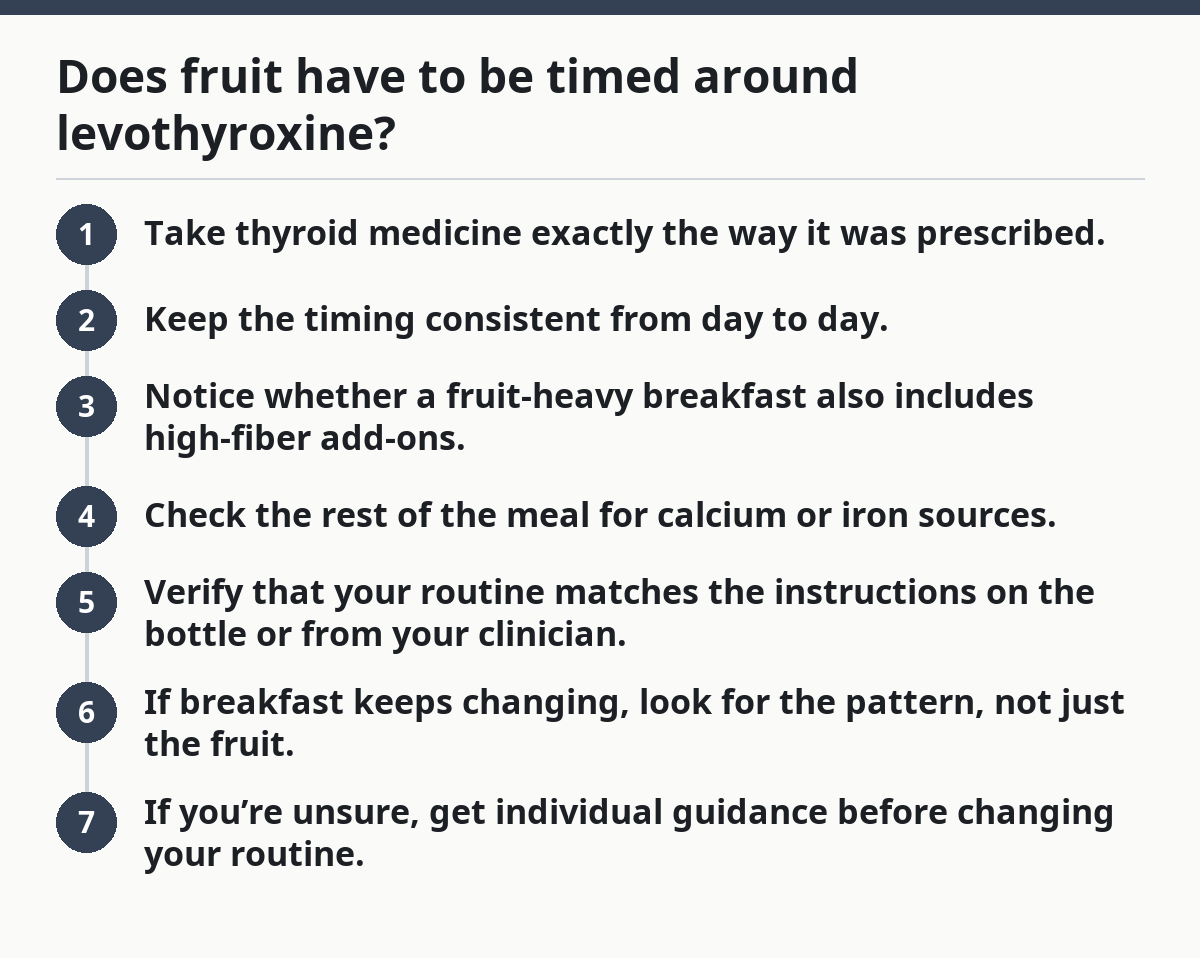
- Take thyroid medicine exactly the way it was prescribed.
- Keep the timing consistent from day to day.
- Notice whether a fruit-heavy breakfast also includes high-fiber add-ons.
- Check the rest of the meal for calcium or iron sources.
- Verify that your routine matches the instructions on the bottle or from your clinician.
- If breakfast keeps changing, look for the pattern, not just the fruit.
- If you’re unsure, get individual guidance before changing your routine.
How fiber content changes the picture
Fiber changes how filling a fruit feels, and that can be a good thing or a problem depending on the rest of the meal. A higher-fiber choice can help a snack last longer, but it can also make a breakfast feel heavier if you already eat plenty of fiber elsewhere.
When the goal is a steadier morning, fiber can help without being the whole answer. Too much of it at the wrong time can make a meal feel bulky, especially if you’re already eating bran cereal, chia, or seeds. That matters more for comfort and routine than for the thyroid itself.
Match the fiber level to the meal. If you want a light breakfast, a peeled fruit or a smaller serving may feel easier. If you need a snack that sticks, choose fruit with more structure and pair it with protein or fat.
- Higher-fiber fruit may feel more filling.
- Lower-fiber fruit may be easier to digest early in the day.
- Juice skips the fiber and can spike hunger faster.
- Pairing fruit with protein can make the meal hold better.
- A fruit snack should fit the rest of your day, not fight it.
How to build thyroid-friendly meals around fruit
Fruit works best in thyroid-friendly meals when it has a job. That job might be to add fiber, give you a sweet note, or make breakfast easier to eat before work, but it should not be the only thing on the plate unless that is all you can tolerate at the moment.
Suppose you’re building lunch and want something simple that won’t leave you reaching for snacks by 3 p.m. Fruit plus protein is usually a better bet than fruit alone. An apple with yogurt, berries with cottage cheese, or citrus after a balanced lunch can feel more stable than fruit by itself.
A good thyroid-friendly meal usually has more than one food group. Fruit can sit beside eggs, yogurt, nuts, nut butter, oats, or other foods that slow the pace of eating and help the meal feel complete.
- Pair fruit with protein when you want steadier energy.
- Use fruit as dessert after a balanced meal if snacks trigger hunger.
- Keep dried fruit portions modest if you tend to overeat sweet foods.
- Choose whole fruit when you want more chew and less sugar concentration.
- Keep the meal simple if medication timing already makes mornings tricky.
The mistakes people make with fruit
Fruit becomes a problem when it is treated like a loophole instead of a food. The mistake is rarely the fruit itself; it’s the way the fruit changes the rest of the day.
For example, you think you’re eating “clean,” but the day starts with fruit juice, then a snack of dried fruit, then a fruit-only lunch. That pattern can backfire by pushing protein, fat, and fuller meals out of the day. The thyroid-friendly part gets lost.
These are the common errors I see in practice:
- Using juice instead of whole fruit: you lose fiber and may feel hungry sooner. Choose the whole fruit unless you truly need a liquid option.
- Treating dried fruit like fresh fruit: dried fruit is easy to overeat because the water is gone. Use a smaller portion and pair it with something filling.
- Eating fruit alone at every meal: fruit-only eating can leave meals too light. Add protein or fat when you need lasting fullness.
- Overloading breakfast with sweet foods: a sweet start can make the rest of the morning harder to balance. Add a savory element or protein.
- Ignoring medication instructions: if fruit is part of a rushed morning routine, the real issue may be timing, not the fruit. Recheck the routine with a qualified professional.
When the standard advice needs to change
Standard advice needs to change when your symptoms, meal pattern, or medication schedule make the usual “fruit is fine” answer too vague. That does not mean fruit is banned. It means the way you use fruit should be adjusted to the rest of the day.
So if you know fruit is allowed but certain breakfasts make you shaky, bloated, or hungry too soon, the task is to adjust the meal, not abandon fruit entirely. The job is to find the version that fits your body and routine.
A few situations call for more caution:
- Your breakfast is always rushed: fruit may be fine, but you may need a simpler, more repeatable breakfast pattern.
- You get hungry fast after sweet foods: pair fruit with protein or eat it after a fuller meal.
- Your digestion is sensitive to fiber: choose softer fruit or smaller servings and watch comfort.
- You use multiple supplements in the morning: the timing stack may matter more than the fruit.
- Your clinician has given you specific food timing rules: follow those rules first, because they’re tailored to your regimen.
What to remember when choosing fruit day to day
Fruit is a useful part of a thyroid-friendly diet, not a food to fear. The best choice is the one that fits your meal, your digestion, and your medication timing without making breakfast harder.
Overall, you want a simple rule you can use at the grocery store. Choose whole fruit, pair it when needed, and keep medication timing consistent. That gives you a practical path without turning every snack into a debate.
More detailed studies are still limited and mixed in type: of the 16 most relevant records, 1 (6%) was tagged as an Observational Study, 1 (6%) as a Review, and 1 (6%) as a Systematic Review (PubMed/NCBI, computed on 2026-11-09). The median study duration in the abstract text was 16 weeks across the sample where duration was stated (PubMed/NCBI, computed on 2026-11-09). That doesn’t tell you what to eat today by itself, but it does show the evidence base is not dominated by one clean, simple trial type.
Is fruit good for hypothyroidism?
Yes, fruit can fit well in a hypothyroidism-friendly eating pattern. The main issue is usually the whole meal, not fruit alone.
If fruit helps you eat a balanced breakfast or snack, it can be a useful choice. If it crowds out protein or complicates your medication routine, it may need to be paired differently. A qualified professional can help if your symptoms or medication schedule make food choices feel unpredictable. For more context, see thyroid nutrition for medication users and levothyroxine timing.
Which fruits are easiest to fit into a thyroid diet?
Berries, apples, bananas, and citrus fruit are among the easiest to fit into a thyroid diet. They’re common, familiar, and easy to pair with other foods.
The easiest option is often the one you can eat consistently. Whole fruit tends to be simpler than juice or heavily processed fruit products, especially if you want fiber and a steadier snack. If you want more meal ideas, see breakfast ideas for thyroid medication.
Does fruit need to be timed around levothyroxine?
Fruit usually does not need special timing by itself, but your whole meal plan around levothyroxine may matter. That’s where fiber, calcium, iron, and routine come in.
If you’re unsure how fruit fits into your medication window, check the instructions you were given or ask a pharmacist or clinician. Small timing details can matter more than the fruit choice alone. For background on the medicine itself, the NHS levothyroxine guide and the American Thyroid Association are useful starting points.
Drafted with AI; not yet reviewed by a person.