Last updated: November 20, 2026
Key Takeaways
- Protein powder is not automatically off-limits with levothyroxine.
- Soy-based or fortified powders are the ones most likely to matter.
- They can change the picture, usually because of the full product, not protein alone.
- Use the label, the clock, and your medication instructions together.
Yes — protein powder can be used by many people who take levothyroxine, but the timing and the ingredients matter, especially if the shake is a meal replacement or includes soy, fiber, calcium, or iron. If you’re not sure how your own shake fits with your medication schedule, speak with a qualified clinician or pharmacist about your situation. The sections below settle what matters, what usually doesn’t, and what to check on the label.
Protein powder and levothyroxine: the short answer

Protein powder is not automatically off-limits with levothyroxine. The problem is usually not the protein itself; it’s what comes with it — soy protein, added minerals, fiber, or a full meal replacement blend. A 2024 review on levothyroxine administration and absorption interference notes that food timing and certain nutrients can change absorption, including calcium, iron, and soy-related products (for example, see ATA and related reviews). The practical question is usually formula plus timing, not protein alone.
A few reviews discuss the issue rather than settling it with one neat rule. The practical takeaway is simple. Plain whey or pea protein is usually a different question from a fortified shake that behaves like breakfast.
Here’s the catch: levothyroxine is sensitive to what sits in the stomach with it. That’s why the label on a tub of protein powder tells you only part of the story.
- Whey protein: milk-based, often paired with calcium in ready-to-drink shakes.
- Pea protein: plant-based, often sold plain or in blends.
- Soy protein: the one most people ask about with thyroid medication.
- Meal replacement shake: not just protein, but carbs, fats, fiber, vitamins, and minerals in one drink.
The question is practical, not abstract. A 16-week study window is common in this literature, and the issue is still being discussed in current guidance. That makes the topic live, not a rumor.
Which protein powders are most likely to cause trouble?
The powders most likely to matter are soy-based or heavily fortified ones. Pure protein is one thing; protein plus minerals is another. The issue is less about the scoop and more about the formula, the serving size, and whether the product acts like a shake or like a meal.
Picture this: you’re standing in the kitchen with a blender bottle, a label full of tiny print, and a levothyroxine tablet already taken or about to be taken. The decision is on the ingredient panel, not the front of the tub.
- Soy protein deserves the most attention because soy foods and soy protein have long been discussed in thyroid nutrition literature. The concern is not that soy is “bad,” but that it can complicate medication timing for some people.
- Whey protein is often simpler, but many whey powders and ready-to-drink shakes add calcium or iron. Those minerals are common reasons levothyroxine absorption can be less predictable.
- Pea protein is usually less discussed in thyroid-specific guidance, yet blends can still contain fiber, minerals, or added botanicals. A “plant protein” label does not mean “interaction-free.”
- Meal replacement shakes are the biggest label trap. They may include protein, fiber, calcium, iron, magnesium, and sometimes caffeine-like add-ons. That makes them a mixed nutrition event.
A plain protein powder with a short ingredient list is easier to fit into a medication routine than a long-form shake with added vitamins and minerals.
Can soy, whey, or pea protein change how levothyroxine works?
Yes, they can change the picture, but usually because of the whole product rather than the protein alone. That distinction matters. Levothyroxine is known to interact with certain foods and supplements, and research commonly discusses soy, calcium, iron, and high-fiber products as possible issues.
The truth is, a label that says “20 grams of protein” tells you almost nothing about thyroid timing. A powder can be low in protein concern and high in absorption concern if it contains 300 mg of calcium, added iron, or a large dose of fiber in one serving.
What to check on the label
- Look for calcium, iron, magnesium, and zinc in the supplement facts.
- Check whether the powder is a meal replacement or a straight protein product.
- Scan the ingredient list for soy protein isolate, inulin, psyllium, or other fibers.
- Watch for blended formulas that include herbs, greens powders, or “thyroid support” add-ons.
What the label does not tell you
- It does not tell you how your stomach empties that morning.
- It does not tell you whether you take levothyroxine with water on an empty stomach.
- It does not tell you whether the shake replaces breakfast or just sits next to it.
The most useful question is not “Is this powder allowed?” It’s “What else is in it?” A professional review can save guesswork here.
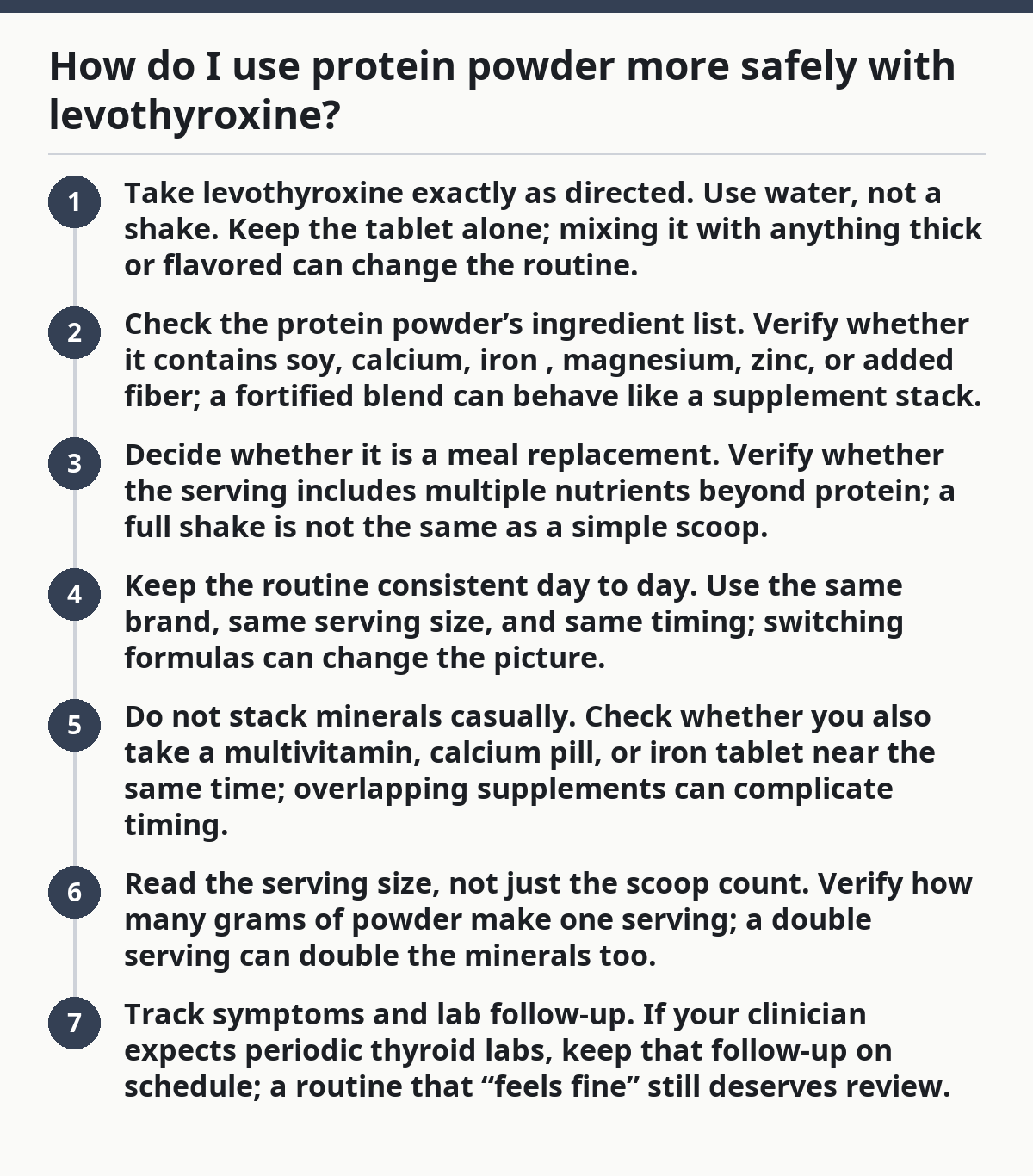
How do I use protein powder more safely with levothyroxine?
Use the label, the clock, and your own medication instructions together. The exact timing should follow the directions you were given for levothyroxine, because individual instructions vary. Do not invent a personal rule from a forum post or a gym tip.
Picture this: you want your morning routine to work the same way every day. That means the shake, the tablet, and the rest of breakfast need a repeatable order. A 10-minute habit is not the same as a reliable routine.
- Take levothyroxine exactly as directed. Use water, not a shake. Keep the tablet alone; mixing it with anything thick or flavored can change the routine.
- Check the protein powder’s ingredient list. Verify whether it contains soy, calcium, iron, magnesium, zinc, or added fiber; a fortified blend can behave like a supplement stack.
- Decide whether it is a meal replacement. Verify whether the serving includes multiple nutrients beyond protein; a full shake is not the same as a simple scoop.
- Keep the routine consistent day to day. Use the same brand, same serving size, and same timing; switching formulas can change the picture.
- Do not stack minerals casually. Check whether you also take a multivitamin, calcium pill, or iron tablet near the same time; overlapping supplements can complicate timing.
- Read the serving size, not just the scoop count. Verify how many grams of powder make one serving; a double serving can double the minerals too.
- Track symptoms and lab follow-up. If your clinician expects periodic thyroid labs, keep that follow-up on schedule; a routine that “feels fine” still deserves review.
The best approach is usually consistency, not perfection.
What if the powder is a meal replacement shake?
A meal replacement shake is more likely to interfere with levothyroxine timing than a plain protein powder. That is because it is designed to replace a meal, not just provide protein. It often contains calories, fiber, fats, vitamins, and minerals in one bottle.
Now, you might be wondering why that matters if the shake is “healthy.” It matters because levothyroxine absorption is about what shares space with the tablet, not just whether the food is nutritious. A meal replacement can be especially tricky when it includes calcium, iron, or a high-fiber blend.
Common examples include:
- breakfast shakes with protein plus oats and seed fiber
- ready-to-drink nutrition shakes
- powder mixes labeled as “complete meal” or “all-in-one”
- weight-loss shakes that add vitamins and minerals
A plain shake and a meal replacement are not the same tool. If the label reads like a multivitamin in liquid form, it deserves more caution than a single-ingredient protein powder.
What mistakes do people make with protein powder and levothyroxine?
The biggest mistake is treating every protein product as if it were the same. The second biggest is assuming that “natural” means “timing doesn’t matter.” Both ideas create avoidable confusion.
Picture this: you’ve been taking the same medication for months, then you swap from a simple whey powder to a new plant blend with fiber and minerals. That kind of change can quietly alter the routine even if the scoop looks identical.
- Mistake: using a fortified shake like plain water. The consequence is that calcium or iron may be in the same window as levothyroxine. The better move is to treat it like a nutrition product, not a drink.
- Mistake: ignoring soy because it is plant-based. The consequence is that soy protein gets a free pass it has not earned. The better move is to check the actual product, not the marketing.
- Mistake: switching brands without reading the label. The consequence is that a “new flavor” may hide a very different formula. The better move is to recheck the supplement facts every time.
- Mistake: assuming all whey powders are equal. The consequence is missing added calcium or iron. The better move is to compare ingredients, not the protein source alone.
- Mistake: piling a multivitamin onto a shake. The consequence is mineral overlap. The better move is to separate the moving parts and ask about timing.
- Mistake: changing several habits at once. The consequence is you never know which change mattered. The better move is to keep one routine stable when possible.
Most “protein powder problems” are really label-reading problems. That’s good news, because labels can be checked.
When should I stop guessing and ask for help?
Ask for help when the shake is more than protein, when your routine keeps changing, or when your thyroid numbers have become hard to keep steady. This is the point where a personal review matters more than generic guidance.
Your powder contains calcium or iron: those minerals are common absorption concerns — ask a pharmacist or clinician how to separate them from your medication routine.
Your powder is a meal replacement: these products often combine protein, fiber, and minerals — bring the label to a qualified professional and ask how it fits your schedule.
Your brand uses soy as a main protein: soy deserves a closer look than plain whey or pea protein — get specific advice on your exact product.
You changed products and then your labs changed: the timing or formula may be part of the picture — tell the clinician who manages your levothyroxine.
You are adding iron, calcium, or a multivitamin too: stacking supplements can complicate timing — ask for a plan that covers all of them together.
You cannot keep the routine consistent: inconsistency makes it hard to know what is happening — choose one plan with professional input instead of guessing day by day.
The goal is not to ban protein powder. The goal is to keep your medication routine predictable.
Protein powder, labeled clearly: what usually works best?
The simplest products are usually easiest to fit around levothyroxine. A short ingredient list, no added minerals, and no “complete meal” claims make a powder easier to understand. That does not make it safe for every person, but it makes it easier to reason about.
If you are choosing between types, plain whey or plain pea protein is often simpler than a soy-heavy or vitamin-fortified blend. Plain does not mean perfect. It means fewer moving parts.
A good label check takes under 2 minutes:
- find the protein source
- find added minerals
- find fiber sources
- find whether it is a meal replacement
- compare the serving size with the scoop
If you want the bigger thyroid-nutrition picture, the hub on thyroid nutrition for medication users belongs next. This page is only the protein powder piece.
Does protein powder affect levothyroxine absorption?
It can, depending on the formula and timing. Protein powder by itself is not the main concern; added minerals, soy content, and meal-replacement formulas are more likely to matter. Research on thyroid nutrition and medication timing suggests the interaction varies by product and by person, so a pharmacist or clinician can help you map your exact routine.
Is whey protein safer than soy protein with levothyroxine?
Whey is often simpler, but it is not automatically safer in every formula. Soy gets more attention in thyroid discussions, yet whey powders can still include calcium or iron, which also complicate timing. The product label matters more than the protein source alone, and the safest routine is the one that stays consistent.
Can a meal replacement shake replace breakfast with levothyroxine?
It can replace breakfast, but it may not be a good match for the same timing window as levothyroxine. Meal replacement shakes often contain fiber and minerals that can affect absorption. If a shake is your breakfast, the details belong in a personalized medication plan from a qualified professional.
Drafted with AI; not yet reviewed by a person.